
NEWS
PoliticsActive Oil Rigs Surge From 14 to Over 60, Lifting Nigeria’s Crude Output Above 1.7 Million bpd, Says Lokpobiri
By Emmanuel Oluwafemi Oniyide | 1st Oct 2026 | 10:33 AM
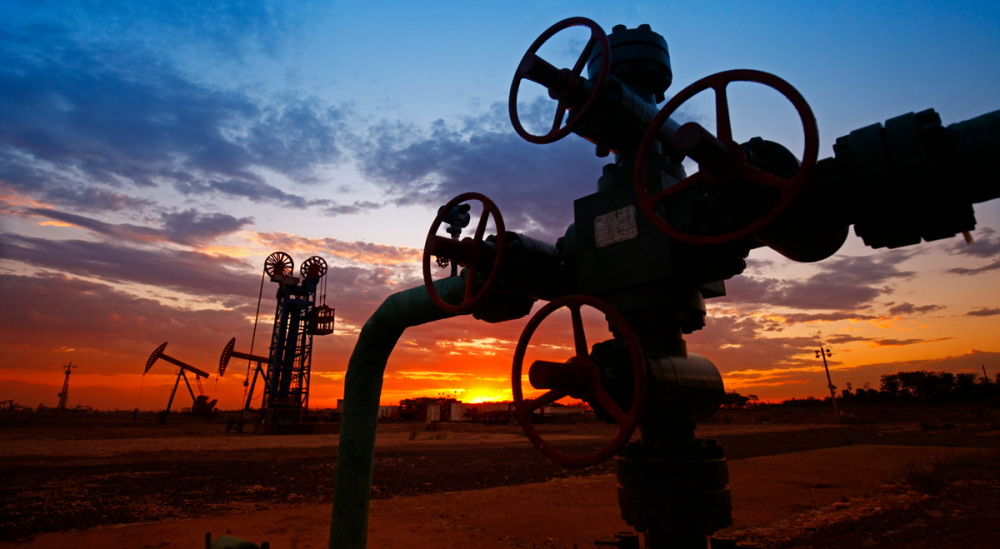

Nigeria’s active oil drilling rig count has risen from approximately 14 to more than 60 under the administration of President Bola Tinubu, helping to lift crude oil production to over 1.7 million barrels per day, Minister of State for Petroleum Resources (Oil) Heineken Lokpobiri said on Wednesday, October 1, 2026.
Lokpobiri, represented by his Technical Adviser, Downstream, Emmanuel Sinime, disclosed this at the inaugural Petroleum Technology Development Fund (PTDF) Journal Summit in Abuja, themed “Private Sector Participation in Nigeria’s Midstream and Downstream Petroleum Sector: Prospects, Challenges and the Way Forward”.
The minister attributed the production recovery to ongoing reforms in the petroleum industry, which he said were restoring investor confidence, improving regulatory certainty and creating conditions for increased private sector investment. He added that Nigeria had recorded more than $10 billion in foreign direct investment in recent years.
Lokpobiri said major divestment transactions by international oil companies had created opportunities for indigenous operators, who now account for more than 50 per cent of Nigeria’s crude oil production — a historic milestone for the industry.
“Significant progress has also been made in restructuring the industry by completing major divestment transactions involving international oil companies,” he said. “These transactions are creating great opportunities for indigenous operators who now account for more than 50 per cent of Nigerian crude oil production”.
The minister said crude oil production had risen from about one million barrels per day in 2023 to more than 1.7 million barrels per day. Independent data from the Nigerian Upstream Petroleum Regulatory Commission (NUPRC) showed crude oil and condensate production averaged 1,677,777 barrels per day in August 2026, with daily combined output ranging between 1.64 million and 1.71 million barrels per day during the month.
This marked the fourth consecutive month in 2026 that Nigeria met its OPEC production quota of 1.5 million barrels per day.
Lokpobiri said the increase in crude oil production and drilling activity must be matched by adequate infrastructure, efficient transportation and storage systems, expanded refining capacity and a competitive market capable of delivering value to consumers and investors.
He cited the emergence of the Dangote Petroleum Refinery and the increasing operations of modular refineries, including Waltersmith and Aradel, as evidence of what private sector investment could achieve in the downstream industry.
The minister, however, identified infrastructure deficits, regulatory uncertainty, logistics challenges, market volatility, exchange-rate movements and high transportation costs as significant constraints to investment.
He stressed the need to strike a balance between regulation and the ability of businesses to operate, attract investment and create jobs.
Also speaking at the summit, Minister of State for Petroleum Resources (Gas) Ekperikpe Ekpo said the Federal Government could not develop Nigeria’s gas sector alone, stressing that private capital, technical expertise and innovation were critical to unlocking the country’s natural gas resources.
Ekpo said infrastructure gaps and high financing costs, alongside project development risks, regulatory bottlenecks and inadequate access to reliable energy infrastructure, remained major challenges confronting private investors.
He said the Petroleum Industry Act (PIA) had provided an important framework for improving regulatory certainty, strengthening institutional governance and encouraging investment in the midstream and downstream sectors.
According to him, the Decade of Gas initiative aims to transform Nigeria into a gas-powered industrial economy, with natural gas serving as a catalyst for industrialisation, job creation, energy security and economic diversification. Achieving that objective would require sustained investment in gas processing, transportation and distribution infrastructure, as well as liquefied petroleum gas, compressed natural gas, petrochemical and gas-based industries.
“The Federal Government cannot achieve this objective alone. We must continue to deepen collaboration with private investors, financial institutions, technology providers and other stakeholders to mobilise the capital and expertise required to deliver these projects,” Ekpo said.
Earlier, the Executive Secretary of PTDF, Prof. Shehu Aliyu, said the growing participation of private investors in refining, gas processing, logistics, storage and petroleum products distribution presented opportunities for economic growth, job creation, technology development and local capacity building.
He said the PTDF Journal would serve as an important platform for disseminating research findings, technical innovations, industry experiences and professional knowledge across the petroleum value chain, with a particular focus on ensuring that research outputs moved beyond publication to application, intellectual property development and commercialisation.
The summit brought together government officials, regulators, industry operators, academics, researchers and other stakeholders.





Comment on this Post
Comments (0)