
NEWS
PoliticsADNOC Acquires Shell’s South African $1billion Interest in Expansion
By Emmanuel Oluwafemi Oniyide | 9th Jul 2026 | 10:24 AM
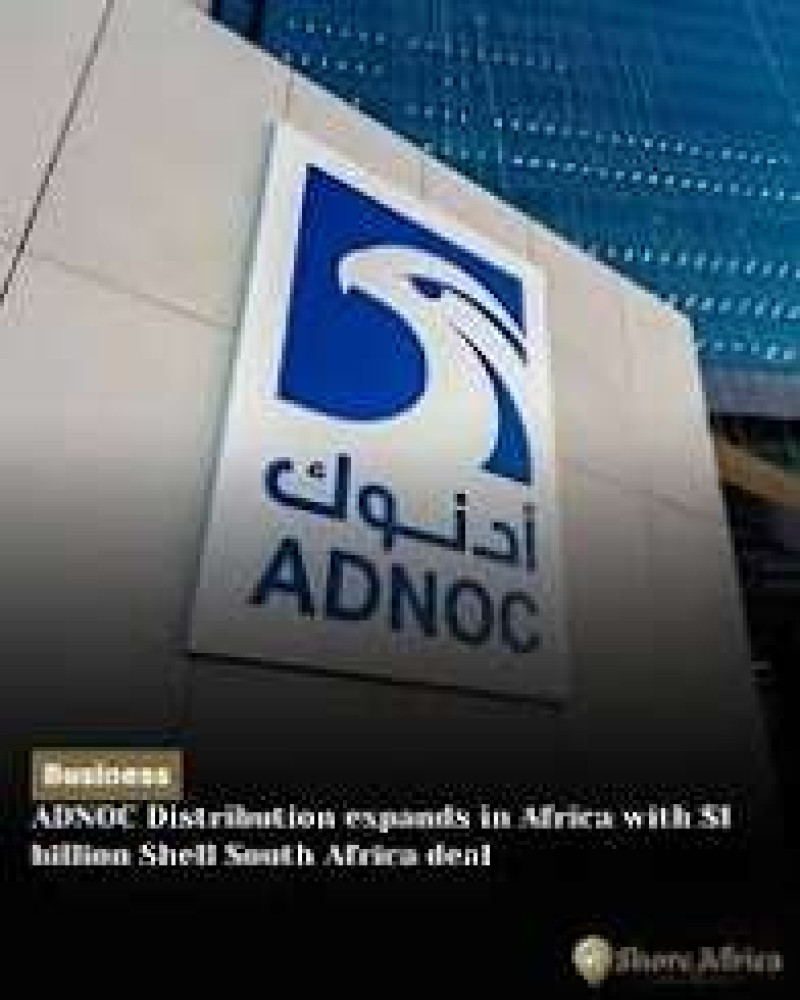

Abu Dhabi National Oil Company's fuel retail arm has struck a $1 billion (R16 billion) deal to acquire Shell's downstream business in South Africa, marking its biggest move yet into sub-Saharan Africa as Gulf energy companies expand their global footprint while Western oil majors continue reshaping their portfolios.
The acquisition gives ADNOC Distribution control of Shell Downstream South Africa, including 580 company- and dealer-owned service stations, wholesale fuel operations, aviation and marine fuels, lubricants, and a network of 360 convenience stores that sold about 3.5 billion litres of fuel in 2025.
The transaction is expected to close in 2027, subject to regulatory approvals.
The deal also gives the Abu Dhabi-based company a significant presence in one of Africa's largest and most sophisticated fuel retail markets, extending its operations beyond the UAE, Saudi Arabia and Egypt. It follows ADNOC Distribution's purchase of a 50% stake in TotalEnergies Marketing Egypt in 2023 as the company accelerates its international expansion strategy.
"The Proposed Acquisition marks a significant milestone in ADNOC Distribution's international growth strategy and reflects our confidence in South Africa as a high-potential, well-regulated fuel retail sector," ADNOC Distribution Chief Executive Eng. Bader Saeed Al Lamki said. "Shell Downstream South Africa is a respected and financially strong business with deep roots in the local economy, and its values and ambitions align closely with our own."
The transaction underscores a broader shift in the global energy industry, where cash-rich Gulf energy companies are using strong balance sheets to acquire strategic assets overseas while international oil majors increasingly dispose of mature or non-core businesses to focus capital on higher-return projects.
For Shell, the sale concludes a strategic review launched in 2024 as part of a broader effort to streamline its downstream portfolio and concentrate investment on assets expected to deliver stronger long-term returns. The British energy major has operated in South Africa for more than a century and previously sold its stake in the country's largest refinery to the state-owned Central Energy Fund after halting refining operations there in 2022.
The acquisition is the latest in a series of deals that have transformed South Africa's fuel retail landscape. Glencore acquired Chevron's Caltex-branded service stations in 2018, while Vivo Energy, backed by Vitol, completed its acquisition of Engen, South Africa's largest fuel station chain, last year. With Shell's downstream assets changing hands, another major chapter in South Africa's fuel retail industry is drawing to a close as ownership increasingly shifts towards new international investors.
For ADNOC Distribution, the attraction extends beyond the number of filling stations. The company described South Africa as a market with favourable long-term fundamentals, citing investment in transport infrastructure, a growing driving-age population and a regulated fuel pricing framework designed to shield retail margins from inflation and currency volatility.
Following completion of the transaction, ADNOC Distribution plans to retain the Shell brand for retail service stations and lubricants under a long-term licensing agreement. Customers are therefore expected to continue using Shell-branded stations despite the change in ownership. The company also intends to sell a 28% stake in the South African business to a local empowerment partner and an employee share ownership plan in line with South Africa's Broad-Based Black Economic Empowerment framework.
The acquisition is expected to increase ADNOC Distribution's earnings per share by about 6% in the first full year after completion and generate returns above the company's investment hurdle rate, highlighting the financial importance of the deal alongside its strategic value.
The South African acquisition adds to ADNOC's wider international buying spree in recent years, which has included investments in natural gas, chemicals and energy infrastructure across North America, Europe, Central Asia and Africa as the Abu Dhabi energy giant seeks to diversify beyond its domestic market.



Comment on this Post
Comments (0)