
NEWS
PoliticsAfrica's Largest Copper Mine Turns on Continent's first 24/7 Solar Battery Plant
By Emmanuel Oluwafemi Oniyide | 31st Aug 2026 | 8:16 AM
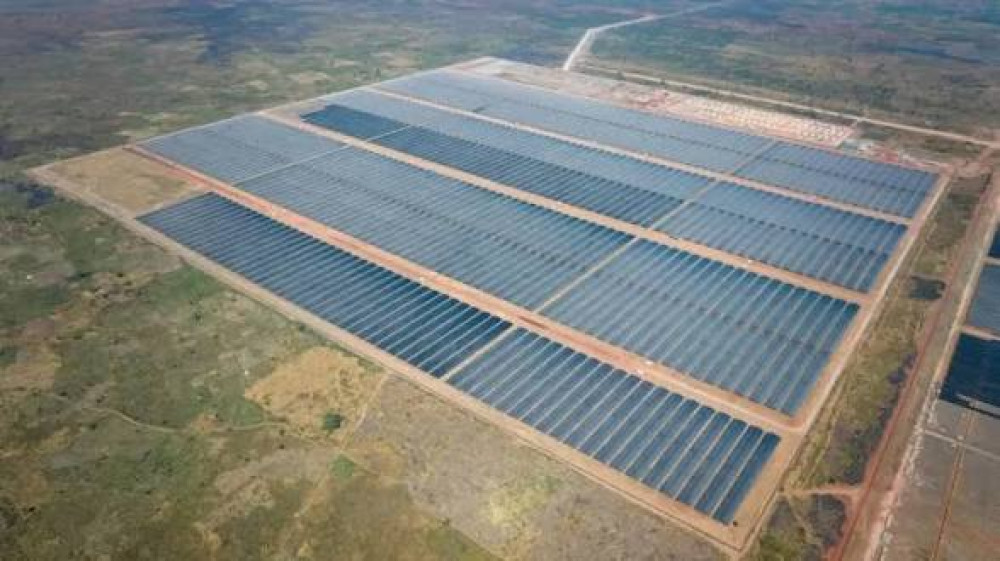

The Kamoa-Kakula Copper Complex in the Democratic Republic of Congo has begun receiving round-the-clock electricity from a 233 MWp solar farm paired with one of Africa's largest battery storage systems.
The facility reached commercial operation on August 12 and is designed to provide at least 30 MW of continuous power, including when the sun is not shining. Kenya-based developer CrossBoundary Energy announced the milestone on August 25.
The system combines a 233 MWp solar photovoltaic array with a 123 MVA/526 MWh battery energy storage system. The batteries store surplus solar power during the day and release it when solar generation declines, enabling the facility to provide a fixed supply rather than electricity only during daylight hours.
CrossBoundary described it as Africa's first operational solar and battery facility designed to provide baseload electricity at this scale. The project moved from signing a power-purchase agreement in April 2025 to commercial operation in 16 months – significantly faster than the average of approximately 29 months for comparable utility-scale African solar and battery projects.
"Achieving this milestone with Kamoa Copper S.A. is a significant step to mainstreaming round-the-clock renewable power," said Gracia Munganga, project development director at CrossBoundary Energy. "It proves how quickly clean, stable energy can be deployed – and the great potential of renewable energy solutions to support the mining sector's ambitious growth".
Kamoa-Kakula is owned by Canada's Ivanhoe Mines, China's Zijin Mining, Crystal River Global and the Congolese government. Ivanhoe and Zijin each hold an indirect 39.6% interest, the DRC government owns 20% and Crystal River holds the remaining 0.8%.
The complex produced approximately 388,800 tonnes of copper in 2025 and generated revenue of $3.28 billion. Its on-site smelter, which began producing copper anodes in December 2025, has a nameplate capacity of 500,000 tonnes annually, making it the largest copper smelter in Africa.
Reliable electricity is critical to the mine's production and expansion plans. Kamoa-Kakula already receives much of its electricity from hydropower, but instability within the DRC's power system has previously forced the mine to rely on diesel generators and imported electricity.
"This project shows that solar and battery storage can deliver dependable, sustainable and cost-effective baseload power for large mining operations," said Auguy Bakome, project manager at Kamoa Copper S.A. "We are confident that renewable energy will continue to play a critical role in supporting the growth of our operations and the mining sector more broadly".
The facility is part of a larger renewable-energy programme at Kamoa-Kakula. Two privately funded solar and battery projects will eventually provide a combined 60 MW of baseload power, with 433 MWp of solar panels and 1,107 MWh of battery storage. Kamoa-Kakula plans to double its on-site solar baseload supply to 120 MW by the end of 2027 as it works towards producing approximately 500,000 tonnes of copper annually from 2028.



Comment on this Post
Comments (0)