
NEWS
PoliticsCMFC Plc Targets Africa’s $700bn Critical Minerals Opportunity
By Emmanuel oniyide | 15th Mar 2026 | 7:55 AM
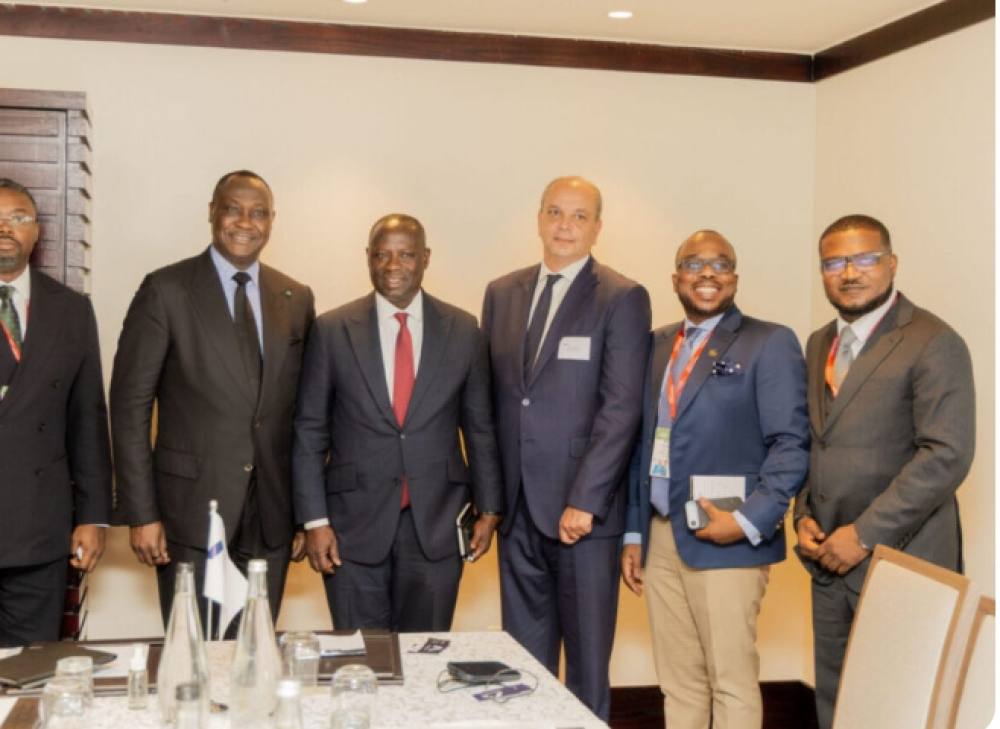

DEAP Capital Plc has rebranded as Critical Minerals Financing Corporation Plc (CMFC), pivoting toward financing Africa’s critical minerals industry amid rising global competition for energy-transition metals.
Shareholders approved the name change during the company’s 12th Annual General Meeting, held in Lagos on Thursday.
The strategic repositioning follows the entry of Banklink Africa Private Equities Limited as a core investor and a fresh capital injection of approximately N6 billion.
The company stated that the funds will support its ambition to develop mineral value chains across Nigeria and the broader African continent.
Commenting on the development, Lamon Rutten, chairman of the company, noted that Africa’s long-standing gap between resource wealth and economic prosperity stems largely from the continent’s inability to capture value locally.
“There’s a gap because those resources are not being ‘valorised’,” Rutten said in an interview with BusinessDay.
“How do you extract value from resources? By financing that development. That’s exactly what this company is going to do.”
Nigeria and several other African countries possess significant deposits of lithium, cobalt, tin, and other minerals used in batteries, electric vehicles, and renewable energy technologies.
The estimated value of these resources in Africa’s most populous nation exceeds $700 billion, yet most remain largely untapped.
Despite this potential, much of the continent’s mineral output is exported in raw form, with processing and the bulk of value addition occurring abroad.
“You have a lot of ore being exported without any processing, so most of the value added of your wealth actually leaves the country,” Rutten said.
He explained that CMFC intends to finance integrated mineral supply chains rather than focus solely on extraction, noting that countries seeking to build modern manufacturing industries increasingly view critical minerals as foundational.
“In the past, the U.S. basically looked at critical mineral strategy as a storage strategy,” he said.
“Now they’re looking at how do we go upstream — how do we go to the mine? They look at it in a value chain way.”
Rutten added that much of the capital financing African mining projects currently originates from outside the continent.
“Currently, the competitors are doing this out of Africa — European, American, even Middle Eastern money,” he said.
“It’s actually a pretty good thing to have African money ‘valorising’ these African resources.”
He also highlighted the structural challenges associated with mining development, noting that projects require significant capital and time.
“If your geologists say there are resources in the ground, you need environmental permits and studies.”
“Logistics is a headache to get the products from the mine to the port or processing plant. Government policies are often out of date,” Rutten said. “It’s a slow process.”
DEAP Capital has struggled to fully recover from the 2008 global financial crisis and continues to report negative shareholders’ funds.
However, the company expects its new board — which includes newly elected directors Israel Ovirih, Tope Oduseso, and Francis Ekeng — alongside the N6 billion recapitalisation to stabilise operations.
The firm reduced its loss to N9 million in the financial year ended September 2025, down from N19.2 million recorded the previous year, supported by a surge in investment income.
Investors appear to be responding positively to the company’s new strategic direction. Shares of DEAP Capital have surged this year, closing at a record N7 on Thursday.
The stock has returned approximately 268 percent since January, making it the third-best performing stock on the Nigerian Exchange in year-to-date terms.
The company said its focus on critical minerals financing is expected to begin delivering noticeable gains within the next 12 to 24 months as it deploys capital and advances projects along the mineral value chain.
“The potential is so large,” Rutten said. “Africa is a very wealthy continent in terms of resources. It’s a very poor continent in terms of actual money.”





Comment on this Post
Comments (0)