
NEWS
PoliticsIf I'm Your Father Where's my Honour, if I'm your Master Where's my Fear?
By Tomiwa | 25th Feb 2026 | 6:10 PM
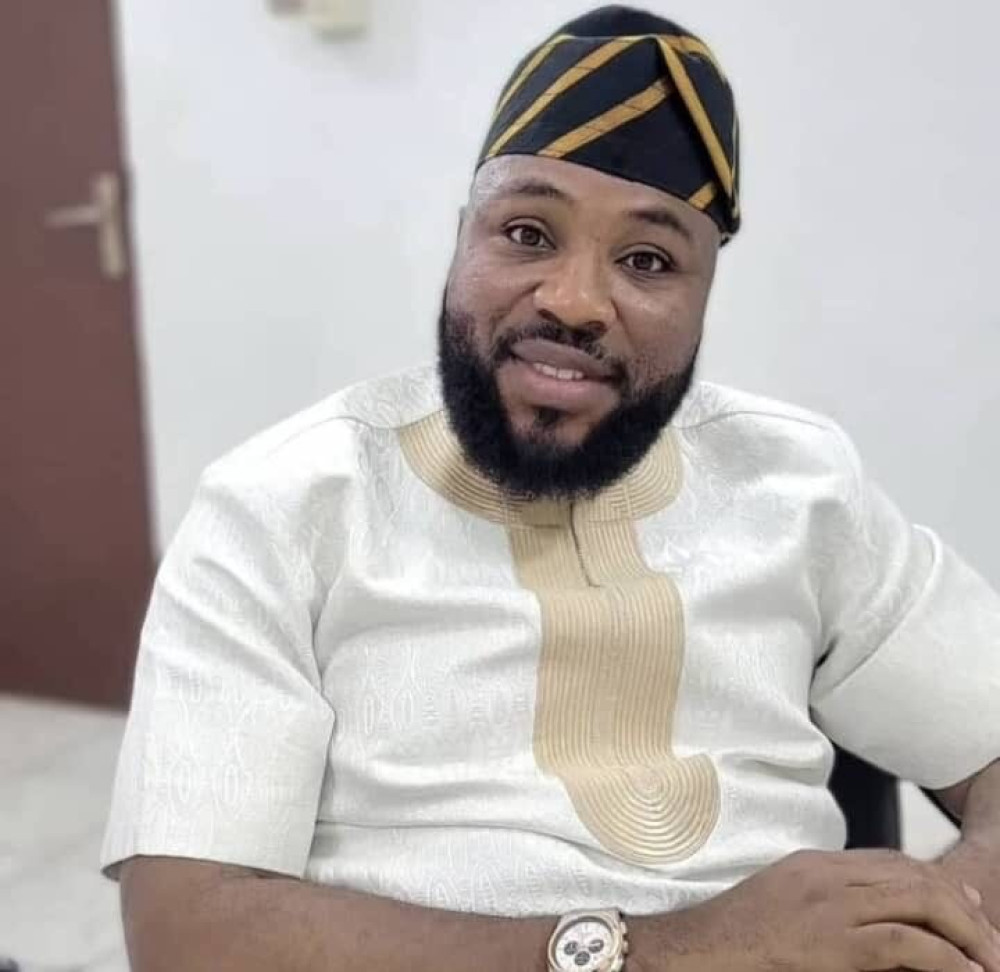

By Bamidele Atoyebi
In recent high-level political gatherings, the air has been thick with commendations for the central government’s "Renewed Hope" agenda. Governors and stakeholders have converged to laud the President’s vision, framing themselves as ambassadors of a new Nigerian dawn. However, as the applause echoes in the capital, a poignant question arises from the streets: when will this vision translate into tangible results at the state and local levels?
The federal government has taken unprecedented steps to realign the nation’s fiscal federalism, ensuring that states and local governments have access to funding levels unseen since the return to democracy in 1999. By shouldering the burden of structural reforms, the center has effectively cleared the path for governors to become the true architects of grassroots transformation. Yet, while the President is praised for his "proactive leadership," the performance of those closest to the people remains under intense scrutiny.
True loyalty to a vision is not found in speeches, but in results. If the national leadership is viewed as a mentor or a guiding light, the greatest honor the governors can bestow is to mirror that performance in their own domains. As the ancient proverb asks, "If I am a father, where is my honor? If I am a master, where is my fear?" For the Nigerian people, that "honor" is measured in motorable roads, equipped hospitals, and the transparent management of local government funds.
It is not enough to be a "Renewed Hope Ambassador" in name; one must walk the talk and be an ambassador of progress in practice. The era of withholding local government funds or stagnating state development must give way to a season of competitive productivity.
Education and healthcare serve as the primary benchmarks for this grassroots transformation. Governors are expected to lead aggressive efforts to return out-of-school children to the classroom while building new, modern schools and refurbishing existing ones. A key component of this "Renewed Hope" should be making education and healthcare entirely free for all children up to the age of 18. Furthermore, state executives must prioritize the construction of modern, well-equipped hospitals to ensure the well-being of their citizens
The disparity between the resources available and the physical development on the ground in many states is becoming a "sad spectacle." Nigerians are no longer satisfied with being told about a brighter future; they want to see it reflected in their immediate surroundings. The burden of proof now lies with the state executives to show that they are truly aligned with the vision they so loudly proclaim.
Ultimately, the success of the Nigerian project is a collective responsibility. While the center provides the framework and the funding, the states must provide the labour and the integrity. Only when the "Renewed Hope" agenda is felt in the smallest village as strongly as it is mouthed in the statehouse will the vision truly be realized. The people are waiting, and their expectations have never been higher.
The "Renewed Hope" vision must shift from rhetoric to results, with loyalty measured by action. As a child of Abraham must do his works, progressive leaders must produce visible "fruit" through redevelopment that the grassroots can truly feel.
Governors must replace stagnation with competitive productivity. Real success requires ending the "sad spectacle" of underdevelopment and effectively communicating tangible achievements to the citizenry.
Bamidele Atoyebi is the Convener of BAT Ideological Group, National Coordinator of Accountability and Policy Monitoring and a publisher at Unfiltered and Mining Reporting





Comment on this Post
Comments (0)