
NEWS
PoliticsMali Tightens Grip on Gold Sector after over $3.8 Billion Exports Undeclared
By Emmanuel Oluwafemi Oniyide | 3rd Jul 2026 | 9:32 AM
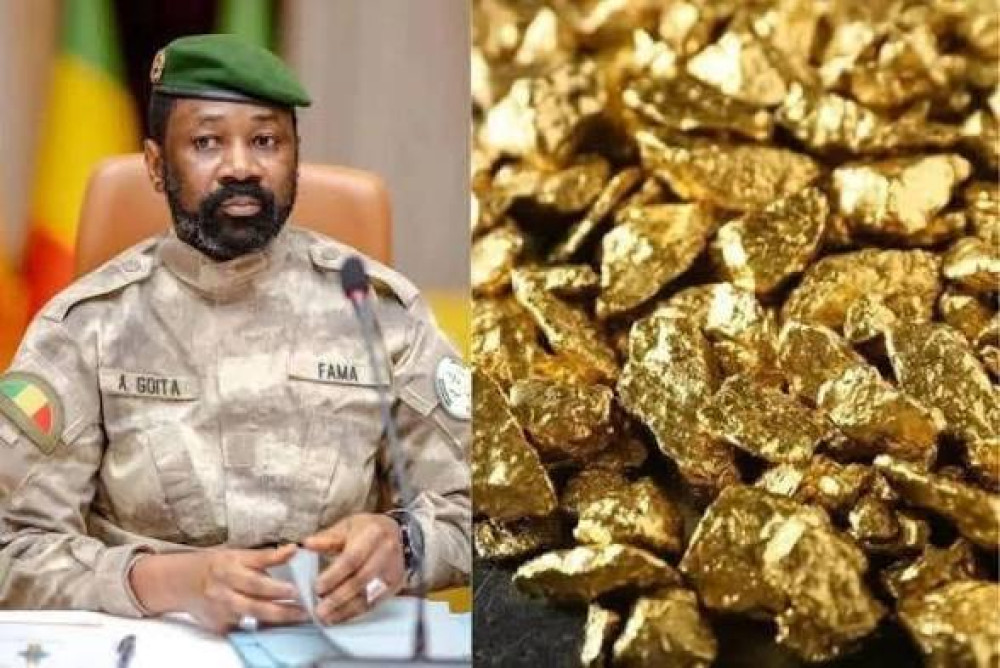

Africa's third-largest gold producer, Mali, has launched a new state agency to regulate its sprawling artisanal gold industry after authorities uncovered major discrepancies between the country's officially declared gold exports and the volumes recorded by importing countries, highlighting the scale of illicit trade draining billions of dollars from one of Africa's largest gold producers.
The government said the newly created Malian Office of Precious Substances will centralise and oversee the trade of gold and other precious minerals, particularly from artisanal and small-scale miners, as Bamako steps up efforts to tighten state control over its most important export.
The move comes as Mali pursues one of Africa's most aggressive mining reform programmes, seeking to recover lost revenues from a sector that underpins its economy while increasing the state's share of mineral wealth.
According to the government, artisanal mining employs nearly 2 million people across 350 to 400 mining sites, but much of the gold produced never enters official export channels.
That informal trade has become increasingly costly. A 2024 report by Swiss NGO SWISSAID estimated that 30 to 57 metric tonnes of Malian gold are exported each year without being officially declared, representing between $1.98 billion and $3.77 billion in annual trade.
The report also estimated that Mali produced around 300 metric tonnes of undeclared gold worth $13.5 billion between 2012 and 2022, suggesting the country has been losing billions of dollars in export earnings and tax revenues for more than a decade.
The new regulator is the latest measure in a sweeping overhaul of Mali's mining industry. Since adopting a new mining code in 2023, the military-led government has increased taxes on miners, expanded state ownership in mining projects from 20% to at least 35%, strengthened oversight of mining operations and launched audits that recovered about 761 billion CFA francs ($1.2 billion) in unpaid revenues from mining companies.
Those reforms also triggered a prolonged dispute with Canadian miner Barrick Mining, whose Loulo-Gounkoto complex, Mali's biggest gold mine, was caught in a two-year standoff over the new rules before both sides reached a settlement.
Analysts say the creation of the new agency signals that Mali is extending its reform agenda beyond industrial mining to the largely informal artisanal sector, where oversight has remained weak despite the industry's growing contribution to national production.
Across Africa, governments are moving to capture more value from their mineral resources amid elevated commodity prices and rising global demand for critical minerals and precious metals. Neighbouring Burkina Faso, for example, has tightened controls on artisanal gold exports and strengthened state involvement in the sector as part of efforts to curb smuggling and improve revenue collection.
Experts say formalising artisanal mining has become a priority because the sector accounts for more than 20% of global gold production and supports the livelihoods of more than 10 million people, yet much of its output remains outside official supply chains.
For Mali, bringing more of that production into the formal economy could significantly boost public finances at a time when the government is seeking to maximise returns from its natural resources.
Official figures from the national statistics agency, Instat, show Mali's declared gold exports climbed to 2.75 trillion CFA francs ($4.81 billion) in 2025 from 1.61 trillion CFA francs ($2.81 billion) a year earlier. South Africa remained the largest destination for Mali's officially declared gold exports, accounting for 60.4% of shipments, followed by the United Arab Emirates at 12.2% and Australia at 12.1%.
But with billions of dollars' worth of artisanal gold still believed to be leaving the country outside official channels, the success of the new regulator will ultimately be measured not by its creation, but by whether it can bring one of Africa's largest informal gold markets into the formal economy.





Comment on this Post
Comments (0)