
NEWS
PoliticsNigeria's Mining Reforms Not Targeted at Foreign Companies
By Emmanuel oniyide | 15th Mar 2026 | 7:59 PM
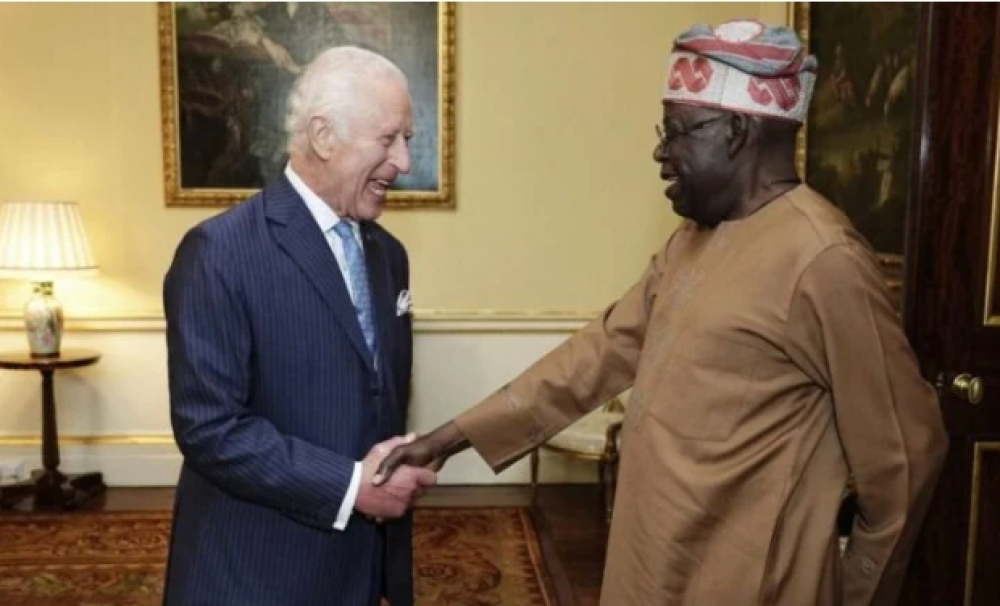

As President Bola Tinubu prepares for his March 18-19 state visit to the United Kingdom at the invitation of King Charles III, the Nigerian government finds itself fighting off what it calls a coordinated disinformation campaign.
The Ministry of Solid Minerals Development has accused an embattled mining firm, Jupiter Ltd, of orchestrating a "campaign of calumny" designed to embarrass the President and mislead the international community about recent license revocations.
At the heart of the dispute lies a straightforward regulatory action: the revocation of five mining licenses held by Basin Mining Ltd, a Nigerian-registered company linked to Australian investor Steve Davis.
The government maintains this was routine enforcement under the Nigerian Minerals and Mining Act 2007, not a politically motivated seizure of foreign assets.
Here is the Nigerian perspective on what happened, why it matters, and what it means for investors.
The Nigerian society Minerals and Mining Act 2007 is unambiguous. Section 1 vests control of all mineral resources in the Federal Government, held in trust for the Nigerian people. This matters because it establishes that mineral resources are national assets, and their exploitation must serve the public interest, not private speculators.
The Act established the Mining Cadastre Office as the sole authority for administering mineral titles. This centralisation was designed to eliminate the opaque practices that once plagued the sector. Importantly, Sections 10 through 12 mandate annual service fees and provide clear revocation procedures: issue a thirty-day default notice, and if payment is not made, revoke the title.
A provision often misunderstood by international observers: Nigerian law does not permit foreign companies to directly obtain mining licenses. Any entity seeking titles must incorporate locally. This ensures foreign investors operate through Nigerian-registered subsidiaries, bringing them within the jurisdiction of Nigerian courts. The requirement applies equally to all investors, regardless of nationality.
The five revoked licenses—titles 45454ML, 45117ML, 45118ML, 40532ML, and 40533ML—were held by Basin Mining Ltd. According to the Ministry, the company failed to pay statutory annual service fees totaling ₦2.494 billion for the 2024 and 2025 fiscal years.
Efforts to reach Steve Davis and representatives of Basin Mining Ltd for comment on the alleged debt were unsuccessful, and the company has not issued any public statement responding to the government's specific financial claims.
The company has previously signalled through third parties its intention to contest the revocation, though no formal legal challenge has been confirmed.
Government sources insist due notice was served under Section 12 of the Act. The revocation occurred only after the company failed to remedy the default within the statutory thirty-day period.
The key figure behind Basin Mining is Steve Davis, an Australian national. The government alleges Davis maintains interests in multiple Nigerian-registered companies used to acquire mineral titles: Comet Minerals Ltd, Range Mining Ltd, Northern Numero Ltd, Sunrise Minerals Ltd, and Iron Ore Mining Ltd. Also named is Hamish MacDonald, who holds a British honour and is accused of participating in what the Ministry terms "a shameful attempt to hoodwink the public."
When a report titled "Nigeria Seizes British Lithium Project Under Armed Guard" surfaced, the government responded forcefully. In a detailed rebuttal titled "In Nigeria's Mining Sector, The Law Is No Respecter of Persons," Special Adviser Kehinde Bamigbetan dismissed the allegations as "a tissue of falsehoods."
The Ministry specifically denies any legal relationship with any company called "Jupiter Lithium Ltd," stating no such entity exists in its records. The allegation that revoked licenses were reallocated to a Chinese firm has been described as a "complete fabrication."
The sensitivity around allegations of Chinese reallocation reflects a broader context of scrutiny over Chinese mining activities in Nigeria. A December 2025 report by the Renevlyn Development Initiative accused some Chinese operators of illegal mining and environmental degradation—allegations that the Chinese Embassy in Nigeria has strongly denied, stating that Chinese companies "have always strictly complied with Nigeria's laws and regulations" and have themselves "been victims of terrorist activities." In February 2026, certain U.S. congressmen also raised allegations of Chinese militant ties, which China described as "completely baseless." Against this backdrop, any perception—even if unfounded—that revoked licenses are redirected to Chinese firms can inflame investor anxiety and complicate Nigeria's reform messaging.
The Basin Mining revocation cannot be understood in isolation. The Ministry has embarked on a nationwide audit of dormant and non-compliant licenses. To date, over 3,794 mining licenses have been revoked for non-compliance. This matters because license speculation has long plagued the sector—individuals and companies acquire titles not for genuine mining operations but for speculation, blocking serious investors and fuelling illegal mining.
Companies owing statutory fees, including Basin Mining, have been referred to the Economic and Financial Crimes Commission for recovery of outstanding debts. This inter-agency collaboration demonstrates the government's determination to enforce compliance and recover revenues due to the Federation.
Minister of Solid Minerals Development Dele Alake has outlined the government's vision: Nigeria is moving away from exporting raw minerals toward prioritising local processing and value addition. This matters because it deepens domestic industrial capacity, creates jobs, and retains more value within the economy. Early gains are already reflected in higher foreign investor interest and a stronger outlook for the industry's contribution to GDP.
For compliant investors, incentives include tax waivers on imported mining equipment and full profit repatriation. The government has assured investors of robust protections under the Cape Town Convention, which safeguards interests in mobile equipment.
Critically, license revocations for non-payment are standard practice globally. Similar actions occur in Canada, Australia, and the United States, where regulators routinely cancel licenses when holders fail to meet statutory obligations. The United Kingdom itself has banned new coal licenses. Regulatory adjustments are a normal feature of resource governance worldwide.
The intensification of this dispute coincides with President Tinubu's state visit to the United Kingdom, focused on strengthening diplomatic and economic ties, including cooperation in trade, investment, security, and migration.
The government alleges Jupiter Ltd's planned "campaign of calumny" is specifically timed to disrupt this visit and undermine Nigeria's reform narrative on the international stage. The Ministry expresses confidence that the British establishment, known for being a "stickler for rules," will not be swayed by what it terms "propaganda, lies, and blackmail."
The Government's Position: Five Key Principles
First, equality before the law. The government insists the law applies equally to all operators, regardless of nationality or connections. This revocation was not targeted at foreign investors but was routine enforcement applied uniformly across the sector.
Second, due process was followed. The company received statutory notices and was given the required period to remedy the default before revocation occurred.
Third, speculation harms the sector. When individuals acquire licenses without undertaking actual mining operations, they deny genuine investors access to mineral deposits and contribute to illegal mining. The current reforms target this practice directly.
Fourth, courts remain the appropriate forum. Any disputes arising from license revocations should be resolved through the judiciary, not public campaigns or media propaganda. Nigeria's courts remain open to legitimate grievances from investors who believe they have been treated unfairly.
While the government's position is legally sound, some observers note that the broader regulatory environment can fuel investor unease. Governance analyses of Nigeria's mining sector highlight structural challenges: under Section 44(3) of the 1999 Constitution, all minerals vest in the Federal Government, but states bear the environmental and social costs of mining without control over the value chain. One 2025 analysis argued this creates "resentment, informality, and weak enforcement legitimacy," and that without a transparent national mining architecture, "every investment becomes a political contest." For foreign investors operating through Nigerian-registered subsidiaries, these structural ambiguities—combined with high-profile revocations—can raise concerns about long-term license security, even when individual enforcement actions are legally justified.
Fifth, Nigeria remains open for responsible business. The message from Abuja is clear: Nigeria welcomes serious partners committed to responsible mining and willing to operate within the framework of its laws. For those who have used the sector for speculation rather than development, the era of regulatory tolerance has ended.
From the Nigerian government's perspective, the revocation of Basin Mining's licenses was straightforward: a company failed to meet its financial obligations, received due notice, and subsequently lost its licenses. The attempt to portray this routine enforcement as politically motivated seizure of foreign assets is viewed as a disinformation campaign designed to undermine President Tinubu's reform agenda and embarrass Nigeria during a high-profile diplomatic engagement.
The revocation of over 3,794 licenses for non-compliance demonstrates this is not an isolated action targeting specific individuals but systematic enforcement of regulatory standards.
As President Tinubu travels to the United Kingdom, the government remains confident that the strength of its legal position and the transparency of its reform agenda will withstand scrutiny. The Ministry has urged Nigerians and international stakeholders to disregard attempts by "discredited individuals" to undermine efforts to build a mining sector that truly serves the Nigerian people.
For potential investors, the message could not be clearer: Nigeria welcomes serious partners committed to responsible mining and willing to operate within its laws. The law, as the government repeatedly emphasises, is no respecter of persons.
What remains unclear is the company's specific response to the ₦2.494 billion debt allegation and whether any attempt was made to pay within the statutory notice period. Until or unless Basin Mining pursues the legal avenue the government has indicated is available, the dispute will persist in the court of public opinion—where the government is currently the only speaking party.





Comment on this Post
Comments (0)