
NEWS
PoliticsReport Challenges Assumption That Weaker Regulation Speeds Up Mining Projects
By Emmanuel Oluwafemi Oniyide | 7th Aug 2026 | 9:18 AM
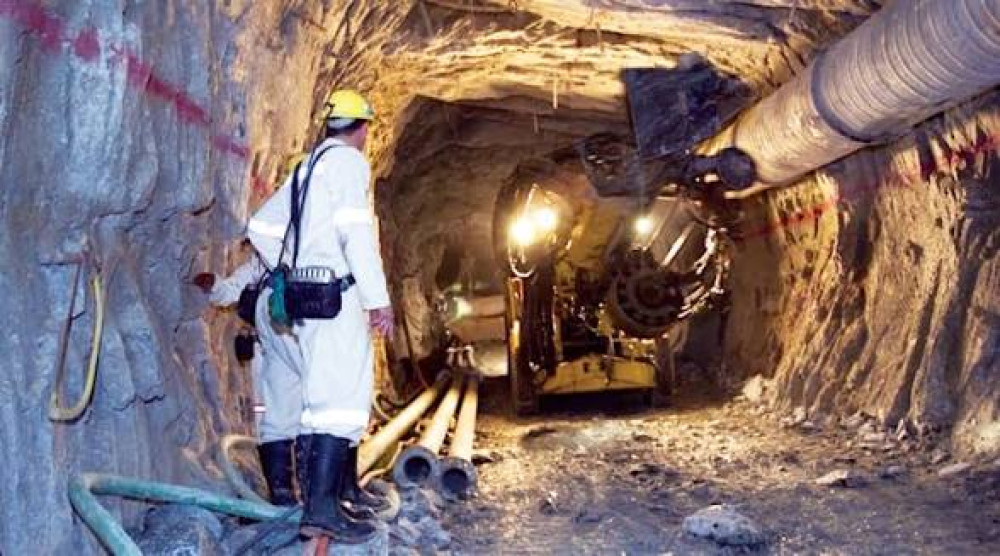

A new report argues that cutting red tape won't necessarily accelerate critical minerals development — and could backfire.
The report, titled "Mined the Gaps: Trust and Critical Minerals," was published by the donor network and platform Trust, Accountability and Inclusion Collaborative (TAI) on August 6, 2026. As governments race to secure minerals for renewable energy and electric vehicles, TAI argues that procedural fairness, effective regulation, environmental stewardship and genuine community participation matter more to project success than speed of approval.
That trust, according to the report, is what prevents the conflicts, legal challenges and regulatory disputes that can delay projects for years and cost companies hundreds of millions of dollars.
TAI independent consultant Sefton Darby said the industry has fallen into an unproductive pattern. "The critical minerals debate has become trapped in an adversarial loop," Darby said, noting that governments and industry often treat community engagement and regulation as obstacles to speed, while communities are expected to accept greater risks in the name of the energy transition.
"But when people have a meaningful voice, confidence in oversight and assurance that environmental and social concerns will be addressed, problems can be identified earlier and resolved before they escalate into opposition, litigation and costly delays."
The report also questions how the industry defines "critical minerals" in the first place. TAI found that roughly 60% of minerals appearing on major critical minerals lists in the EU, US and Australia have no direct energy-transition use case. Some earn that label because of their importance to defense, domestic industry or geopolitical competition — particularly concerns over China's dominant role in mineral processing and refining.
Mixing those different priorities under one label carries risk. The report warns that environmental, development and philanthropic initiatives could end up inadvertently supporting defense or trade agendas rather than the clean energy transition.
Survey research cited in the report — drawn from Australia, Canada and mining communities worldwide — consistently points to procedural fairness, confidence in oversight and effective environmental management as the leading drivers of public acceptance of mining projects.
Much of the report's attention falls on early-stage exploration, long before permitting begins. "Exploration is often led by small, undercapitalised junior mining companies focused primarily on identifying geological resources, with limited funding, incentives or regulatory obligations to address environmental and social concerns," the report states.
By the time a larger company takes over a project, TAI warns, those problems may already be deeply embedded.
Money alone doesn't buy trust, either. The report found that while communities do care about receiving a fair share of project benefits, having a genuine voice, confidence in regulation and assurance about environmental impacts often matters more.
TAI executive director Michael Jarvis framed the findings as a warning to the industry. "This report shows that trust and accountability are not peripheral social considerations.
They are fundamental to whether projects succeed. A transition that ignores community rights will not only be unjust; it will also be slower, more expensive and less sustainable," Jarvis said.
The report proposes a new model: an Adaptive Governance Partnership, or AGP, bringing regulators, mining companies and community representatives together to make decisions continuously throughout a project's lifecycle rather than concentrating scrutiny into a single permitting process. TAI recommends piloting the approach in Australia or Canada, in jurisdictions with regulators willing to experiment.
"The fastest project is not necessarily the one with the fewest rules and regulation. It is the one that identifies risks early, gives communities a genuine role in decisions and creates confidence that commitments will be honoured throughout the life of the mine. Fairness and speed are not competing objectives. Done properly, each makes the other possible," Darby said.





Comment on this Post
Comments (0)