
NEWS
PoliticsTinubu Demonstrates Political Will to Devolve Power, Says Atoyebi
By Mercy Omotosho | 10th Jul 2026 | 2:41 PM
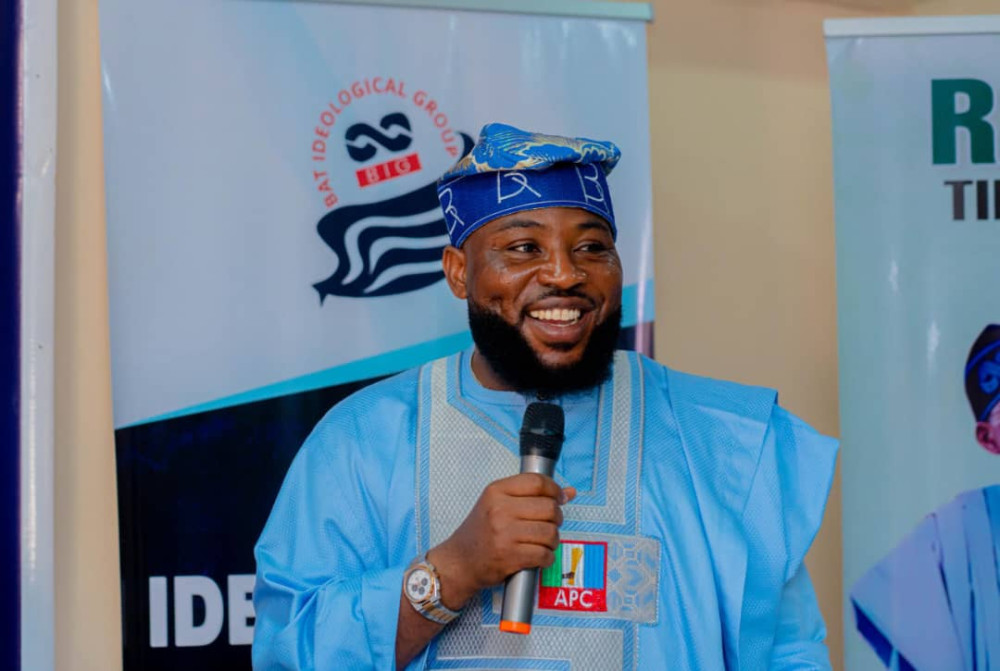

President Bola Ahmed Tinubu is demonstrating uncommon political courage by deliberately devolving powers to states, a move that is reshaping Nigeria’s federal structure and laying the foundation for lasting institutional reforms, Comrade Bamidele Atoyebi, Convener of the Bola Ahmed Tinubu Ideological Group, has said.
Atoyebi stated that Tinubu’s reforms mark a radical departure from Africa’s long-standing political culture, where leaders typically seek to consolidate authority rather than decentralize it. He argued that willingly sharing power requires exceptional statesmanship because political power has historically been treated as something to be accumulated rather than distributed.
“It takes a lot of guts to want to share power,” Atoyebi said. “Across Africa, leaders have traditionally sought to consolidate authority, but President Tinubu is proving that true leadership lies in empowering others rather than monopolising power.”
He said Tinubu’s administration has steadily dismantled the excessive concentration of powers at the centre through reforms that strengthen states and local governments.
Among the major reforms, Atoyebi highlighted the transfer of electricity generation and distribution from the Exclusive Legislative List to the Concurrent Legislative List, a constitutional change that now allows states to generate and regulate electricity independently.
He also cited the administration’s push for financial autonomy for local governments, saying the policy ensures that resources flow directly to grassroots administrations and enhances service delivery at the local level.
Atoyebi maintained that the reforms reflect Tinubu’s long-held commitment to true federalism, dating back to his tenure as governor of Lagos State.
He recalled the prolonged legal battle between the Federal Government and Lagos State after Tinubu created Local Council Development Areas (LCDAs) to devolve governance to the grassroots. The Federal Government subsequently withheld Lagos State’s allocations for years in opposition to the initiative.
Atoyebi said the experience shaped Tinubu’s conviction that excessive centralisation weakens governance rather than strengthen it.
“He understands that a head with a paralysed body cannot function well,” Atoyebi said, describing the analogy as a reflection of Nigeria’s previous federal structure, where the centre retained overwhelming control while states lacked sufficient authority to address local challenges.
The political analyst also renewed support for the establishment of state police, describing it as a natural extension of the President’s broader federalism agenda.
He argued that the current arrangement, where governors are designated as Chief Security Officers of their states without operational control over the police, remains structurally defective.
Atoyebi likened the situation to “calling a man the head of a household while he has no home, no independent income and depends on another person to feed and manage his own family.”
He said effective policing must be rooted in local communities, stressing that security personnel recruited from within their communities possess a better understanding of the local language, terrain, culture and security dynamics than officers deployed from distant parts of the country.
Atoyebi added that community-based policing involving local hunters, vigilantes and other stakeholders would improve intelligence gathering and public trust while reducing operational costs associated with relocation, accommodation and logistics for officers posted far from their home states.
Responding to concerns over the funding of state police, he argued that decentralised policing would ultimately be more cost-effective because personnel would live and work within their communities, eliminating many of the financial burdens associated with a centrally controlled policing system.
Atoyebi also pointed to endorsements of Tinubu’s federalism agenda by prominent public figures.
He noted that Anambra State Governor Charles Soludo recently described Tinubu as a “Professor of Federalism,” while political economist Ken Ife said no previous Nigerian leader had brought the country closer to achieving fiscal federalism.
Atoyebi said those assessments reinforce the central argument of his book, Tinubu’s Proven Principles of Governance, in which he described the President as the “Father of Modern Fiscal Federalism.”
He further cited the establishment of regional development commissions and other constitutional and policy reforms as evidence that the administration is deliberately transferring responsibilities and opportunities to sub-national governments instead of concentrating authority in Abuja.
Atoyebi said the reforms demonstrate that lasting leadership is measured not by how much power a leader accumulates but by how much authority is returned to institutions and the people.
“Leaders do not choose their followers; followers choose their leaders. True leadership does not force compliance; it inspires through superior ideas and a willingness to empower others,” he said.
The BAT Ideological Group convener maintained that Tinubu’s reforms would leave a lasting institutional legacy by strengthening Nigeria’s federal system, deepening fiscal federalism and enabling every state to maximise its economic potential while contributing more effectively to national development.





Comment on this Post
Comments (0)