NEWS
Special ReportYoruba Leaders And Earnest Search For Asiwaju Replacement in 2031
By By Bamidele Atoyebi | 9th May 2026 | 4:52 PM

Asiwaju Bola Ahmed Tinubu, a name synonymous with resilience and strategic political brilliance, has not only dominated Nigeria's political landscape but has redefined what it means to be a leader of the people. Often hailed as the grandmaster of Grassroots Politics," his enduring influence for over 16 years, even without holding formal executive power, is a testament to a character rooted in commitment, accessibility, and an unwavering dedication to humanity.
Unlike many in the political sphere, Asiwaju’s home is a perpetual Mecca of sorts for those in need. From dawn until the late hours of the night, his doors remain open to a diverse spectrum of individuals. Whether they seek assistance with personal needs, health concerns, employment opportunities, or guidance on contract and approval processes, Asiwaju’s approach is one of inclusivity.
Those close to him testify that he never looks down on anyone, regardless of their status. His philosophy is simple: if your matter is public, he addresses it, if it is private, he makes the time to listen personally.
The true measure of a leader is often found in the stories shared by those who have walked beside them. Personal accounts from associates like Lai Mohammed and Alhaji Tejumade paint a vivid picture of a man whose heart beats for the people.
On one occasion, his staff and close associates, concerned for his health, came together to ensure he got some much-needed rest. They instructed the security to inform all visitors that Asiwaju was unavailable. However, upon waking and noticing the unusual silence, Asiwaju immediately sensed something was amiss. "Why is everywhere so quiet? Why am I not seeing people?" he questioned. Realizing the plan to shield him, he took it upon himself to call individuals personally, insisting they come to see him.
His life is fueled by the energy and needs of the people he serves.
Alhaji Tejumade gave an account of a striking example of Asiwaju’s impact is the story of a man whose son was struggling to find employment. Despite being a vocal critic of Asiwaju, the man sought help through Alhaji. When they arrived at Asiwaju’s residence in Bourdillon, they were met with a leader who was about to depart for the day, instead of dismissing them or inquiring about the man’s past criticisms, Asiwaju listened. Without hesitation, he took out a card, wrote a note, and handed it to the man, instructing him to give it to the potential employer.
Another testament to his dedication occurred when his wife, the First Lady, urged visitors to leave so her husband could rest. While she believed he was finally getting some sleep, Asiwaju had other plans. In a display of his characteristic wit and commitment, he slipped out through the back, jumped into a car, and went to meet a group of people at a separate location to continue his work.
His compassion extends to the most marginalized. During a public outing, his team tried to move aside a man with a physical disability who was waiting to see him. Asiwaju immediately intervened, questioning why they were stopping the man. He not only attended to him on the spot but ensured he was brought to his home the following day for further assistance.
Asiwaju Bola Ahmed Tinubu is more than a politician; he is a philanthropist with a conscience and a leader of profound humility. His legacy is built on the belief that true power lies in the ability to uplift others. For anyone aspiring to follow in his footsteps, these traits accessibility, empathy, and a tireless spirit of service are not just optional; they are the very essence of what it means to be a leader for the people.
With 2031 rapidly approaching, the time to begin this search is not tomorrow it is immediately. Nigeria stands at a crossroads where the quality of future leadership will determine the country's trajectory for decades to can.
Finding a replacement is not merely about filling a seat; it is about finding a soul that mirrors the grit and vision of the current leadership. We are looking for a leader who is humane to the core someone whose heartbeat matches the rhythm of the common man. This individual must be people-oriented, a true philanthropist who gives not for the cameras, but because it is their nature.
The ideal successor must be an addicted and passionate grassroots developer. We need a progressive thinker with extreme intelligence, capable of navigating the complexities of modern governance while staying rooted in the soil of the community.
True leadership requires a rare level of patience. We need someone who is willing to wait for their time, demonstrating a nature that is not disruptive but stabilizing. The search must prioritize those who are: Selfless, leader who is not all about themselves or their family, generous, someone who will give and give until they have produced another generation of leaders, principled, an individual devoid of greed and driven by the desire for **good governance.
A critical component of this search is finding a party man to the core. We must be wary of those who exhibit antiparty tendencies those who are quick to hand over the hard-earned rewards of the party to outsiders or to those who never labored for its success.
The next torchbearer must be someone who understands that the party's strength lies in its loyalty and its commitment to the people who built it. As we look toward the future, the goal remains clear: to find a leader who will wait their turn, serve with integrity, and ultimately give us another era of visionary leadership.
The disconnect in the Southwest today is profound. As the primary elections approach, there is an urgent need to set things in the right position, but the reality on the ground suggests that those claiming to follow the "Asiwaju Way" are walking a completely different path.
A recent discussion I had with a governorship aspirant exposed the depth of this crisis. He lamented how the sitting governor has sponsored multiple people specifically to frustrate his run. When I suggested he call these rivals together especially those from his own region to explain the risk of going to war divided, his response was disappointing. He claimed that "Asiwaju nikan lo le se" (only Asiwaju can do it). It is frustrating to see people claim alignment with the President’s ideology while lacking the initiative to build the very bridges he is known for.
This pattern of behaviour is clear in Oyo State. Looking back at the 2023 cycle, Senator Teslim Folarin was supposed to lead the APC, yet his approach was one of alienation. A senator friend shared how Teslim allegedly hijacked tickets to give to his own preferences, famously saying behind their backs, "a gba lowo won ni, ti a ba ti gba lowo won tan a lo be won" (we will take it from them and beg them later). This is not the President’s way. If Asiwaju collects something from you, he replaces it with something far better. Taking without comfort or compensation only leaves the party fractured.
Then there is the matter of Bayo Adelabu. Based on firsthand accounts, I have made up my mind that he does not deserve help to get closer to the governorship. Reports suggest he intentionally limits his generosity, believing that if you give people too much, they won't come back to you for help. From handing out a mere 10,000 naira to students in 2016 while dismissing their needs, to accounts from 2010 suggesting his own mother lived in a "face me I face you" building while he built hotels, the pattern is one of self-interest over communal growth.
Even during his three-year tenure as a Minister, sitting on an economy worth trillion, he failed to award contracts to Oyo party members to help them sustain themselves. The viral voice notes from two years ago say it all: party members feel hungry and abandoned, like sheep without a leader. Now, he returns thinking people have short memories, claiming the President gave him the "go ahead." But the President is a master strategist; he knows who is actually working for the people and who is simply using "boys" to disrupt party activities in the state.
The people currently coordinating candidacy affairs in the Southwest do not possess the spirit of Asiwaju. They are inaccessible, they are proud, and they look down on the very people they are meant to lead. Asiwaju is 100% accessible and never looks down on anyone.
To claim you follow him while lacking those qualities is, quite simply, "Iro ni."
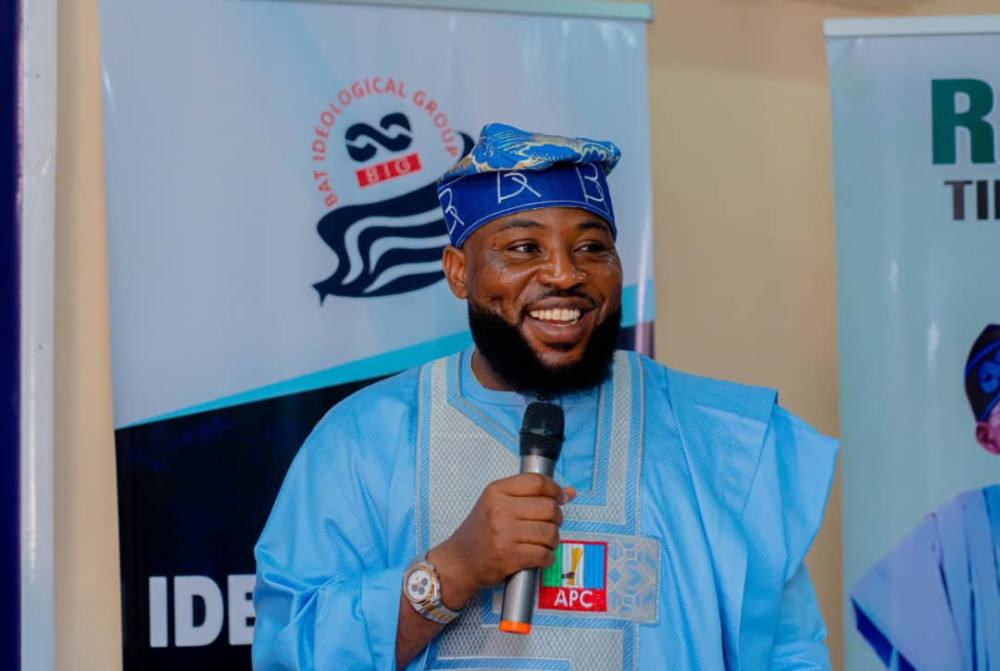
Bamidele Atoyebi is the Convener of BAT Ideological Group, National Coordinator of Accountability and Policy Monitoring and a publisher at Unfiltered and Mining Reporting





Comment on this Post
Comments (0)