
NEWS
PoliticsAnglo American Secures Year-long Iron Ore Supply Deal with China
By Emmanuel Oluwafemi Oniyide | 18th Aug 2026 | 10:22 AM
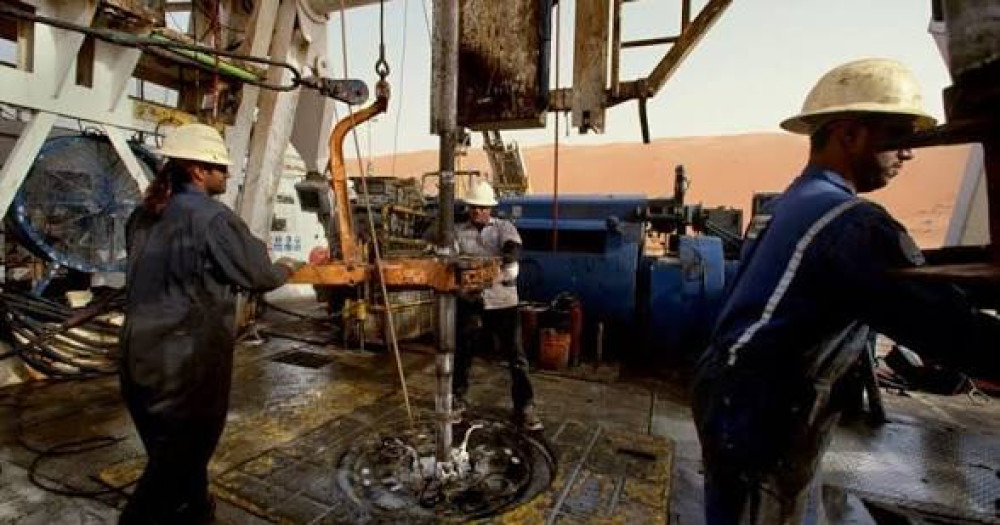

Anglo American has struck a year-long supply agreement with China’s state-backed iron ore buyer, securing access to the world’s largest market for the steelmaking commodity.
The deal, which took effect on April 1 and runs through March 31, 2027, covers iron ore from Anglo’s South African subsidiary, Kumba Iron Ore. Two sources familiar with the matter put the contract volume at around 10 million metric tons.
The agreement does not include ore from Anglo’s Minas-Rio project in Brazil.
Kumba Iron Ore sold approximately 37 million tons of its higher-grade product in 2025. China accounts for about 54% of Anglo’s total iron ore output, though the company sells to the country through multiple channels including spot sales and other long-term contracts.
Anglo American’s global head of sales and trading, Ebrahim Dadoo, confirmed the agreement during a July 28 earnings call.
“We’ve had very constructive engagements with CMRG, we’ve got an agreement in place with them as of the first of April, and that does impact our products that we sell to CMRG member mills,” Dadoo said.
The China Mineral Resources Group, or CMRG, was established in 2022 to consolidate purchasing for China’s steel industry and strengthen Beijing’s bargaining power against global mining companies. The group represents more than half of China’s steelmakers in procurement negotiations.
Anglo now joins BHP Group among major miners that have finalised agreements with the state buyer. BHP faced months of tense negotiations and restrictions on some cargoes before reaching its deal in April.
Fortescue, by contrast, remains locked in difficult talks with cargoes reportedly held up as negotiations stalled.
Kumba’s iron ore, produced at its Sishen and Kolomela mines in South Africa’s Northern Cape, has an average iron content of about 64%. The premium quality of the ore has strengthened the company’s negotiating position.
Anglo American declined to comment further. CMRG did not immediately respond to a request for information.
A joint study by Duke University and the University of Cape Town has identified five concrete investment priorities for countries and companies seeking to capture value from the expected surge in lithium and rare earths demand.
The report comes as the International Energy Agency predicts that meeting climate targets requires an eight-fold rise in lithium demand and a doubling of magnet rare earth demand by 2040.
The binding constraint, the researchers found, is not getting resources out of the ground but the midstream processing stages – where China currently controls between 60% and 70% of lithium conversion and more than 85% of rare earths separation.
The Duke and UCT team recommends that companies making strategic decisions should concentrate on five priorities: capturing value at the processing choke point, targeting the pilot-to-demonstration stage, investing in new technologies beyond traditional evaporation ponds for lithium, prioritising the energy and carbon cost of conversion, and treating separation and recycling as important priorities for rare earths.
"Because these value chains are concentrated rather than truly global, choke point participation is best treated as an entry point toward broader integration across adjacent stages of the chain, not as an end state," the report states.
"This requires identifying and committing to specific processing partnerships or in-country conversion investments at the project development stage, well before financial close."
The technology readiness level window is critical because the most commercially credible innovations across the lithium and rare earth chains – direct lithium extraction, lower-temperature spodumene roasting, and continuous rare earth ion exchange – currently sit at readiness levels 5 to 7.
That is precisely the stage where capital availability, not technical uncertainty, is the main constraint.
"Companies able to invest in equity, offtake commitments, or co-development partnerships at this stage will secure better technology access and pricing than those that wait for technology readiness levels 8 to 9," the organisations note.
For lithium through brine production, conventional evaporation recovers only 30% to 50% of lithium over a 12- to 24-month cycle – but direct lithium extraction technologies, particularly those deployed in China and Argentina, can recover more than 90% in hours.
However, the researchers caution that DLE performance is strongly dependent on brine chemistry, and most flowsheets still require downstream concentration. New entrants should evaluate DLE against site-specific conditions rather than building pond-only infrastructure by default.
For hard-rock spodumene processing, calcination at 1,000°C to 1,100°C accounts for roughly half of refinery process energy and is the dominant source of Scope 1 emissions. Lower-temperature sulphate and chloride roasting routes operate at markedly lower temperatures and can also process lower-grade feeds that conventional acid roasting cannot handle.
In rare earths processing, the researchers point to Norwegian company REEtec's solvent-free separation process as the most credible near-term alternative for new capacity outside of China. For recycling, hydrogen processing of neodymium-iron-boron magnets, as done by HyProMag in the UK and Cyclic Materials in Canada, is becoming commercially relevant – though feedstock remains constrained until first-generation electric vehicle and wind turbine magnets reach end-of-life volume around 2030.
For governments, the researchers recommend funding the "commercialisation valley" rather than only laboratory experiments, as well as banding together to build an international evaluation framework for critical mineral processing R&D.
They also urge pairing supply-side funding with demand-side commitments such as guaranteed price floors, strategic stockpiles and magnet content requirements in government procurement.
The report notes that the US Department of Defence's 2025 arrangement with MP Materials, which included price floors, demonstrates the effectiveness of this approach.
Supply-side grants without a demand signal, the researchers warn, leave technology readiness level 6 to 7 firms stranded in the commercialisation valley.
For emerging economies, the report recommends negotiating technology transfer provisions and domestic processing mandates as part of mining agreements from the outset, rather than seeking to add them after production has begun.
"Governments in resource-rich emerging economies should negotiate technology transfer provisions and domestic processing mandates as part of mining agreements from the outset, rather than seeking to add them after production has begun," the report states.
"Bilateral and regional trade agreements can serve as enforcement vehicles for these provisions: technology-transfer and local-processing clauses embedded in free-trade agreements are more durable than project-level agreements, particularly where the counterparties are State-owned enterprises."





Comment on this Post
Comments (0)