
NEWS
PoliticsApril 22/2026: Tinubu Handed Over Your Country to You And You Knew it Not Genesis 28vs16: The Lord was Here and I Knew it Not
By Bamidele Atoyebi | 4th Nov 2026 | 9:12 AM

There are moments in the life of a nation when opportunities arrive quietly, wrapped in policy documents, government circulars and official announcements. The doors to possibilities are opened, yet the very people standing before them remain unaware that they have been invited to walk through.
Sometimes, the tragedy is not that an opportunity was denied, but that it was presented and the people failed to recognise it.
On April 22, 2026, President Bola Ahmed Tinubu approved the establishment of a Community-Based National Social Action Fund Taskforce, an initiative designed to drive grassroots development across Nigeria’s 8,804 political wards. The Federal Government announced that ₦17 billion would be released into a ring-fenced intervention account to support implementation, monitoring, communication and accountability. Verified community-based organisations, associations and entities would be positioned to identify and implement priority interventions suited to their communities.
The announcement by the Federal Ministry of Health and Social Welfare was more than another government statement on development. It presented a framework for bringing development closer to the people whose lives are directly affected by the absence of basic infrastructure and social services.
Yet, how many Nigerians understood the significance of this announcement? How many community associations, youth groups, market leaders and residents’ organisations began asking what it meant for their communities?
Perhaps the most fitting description of this moment is found in the Bible.
In Genesis 28, Jacob, travelling from Beersheba to Haran, stopped at a certain place as night fell. He slept with a stone beneath his head and dreamed of a ladder reaching from earth to heaven, with angels ascending and descending upon it. God reaffirmed His covenant with him, promising protection, descendants and the land.
When Jacob awoke, he declared: “Surely the Lord is in this place; and I knew it not.”
Jacob had been standing in a place of profound significance without recognising it. The revelation came after the experience.
For many Nigerians, the April 22 announcement may represent a similar moment. An opportunity to participate more directly in the development of their communities has been presented. The question is whether the people recognise what is before them.
Nigeria’s development challenges are not abstract. They are visible in communities where residents travel long distances for potable water, where primary healthcare centres lack essential facilities, where schools struggle with inadequate infrastructure and where poor roads undermine economic activity.
These are problems the people themselves understand intimately. Residents know where roads are impassable, parents know which schools are struggling, market women understand the obstacles to trade, and community health workers know what their facilities lack.
The community-based fund offers a framework for bringing these realities into the development process. Its proposed interventions include nutrition, essential health commodities and minor infrastructure improvements in schools, health facilities and sanitation systems.
A community that understands its needs, organises its people and presents a credible, evidence-based proposal is better positioned to engage with a development programme than one that remains passive.
Imagine a village association identifying the absence of a functional water facility as its most urgent need, documenting the number of households affected, consulting residents and engaging the appropriate verified implementing organisation. Imagine a community health centre whose deficiencies are properly documented and presented through the relevant programme structures.
The possibilities are substantial.
However, this is not a promise that every community will receive an unrestricted pot of money or that residents can simply nominate contractors and share the proceeds. The initiative is structured around verified organisations, priority interventions and programme oversight.
Its potential value lies not in distributing wealth indiscriminately, but in creating opportunities for local development, employment and legitimate economic participation.
For years, many Nigerians have believed that economic advancement requires abandoning their communities for cities such as Abuja and Lagos. But what if development could create meaningful opportunities closer to home?
Local projects can generate demand for artisans, engineers, construction workers, suppliers, transporters and small businesses. Improved infrastructure can reduce transportation costs, expand access to markets, improve healthcare and strengthen local economies.
A functioning water system may not put cash directly into every resident’s pocket, but it can improve health and reduce the hours spent fetching water. A rehabilitated road can make a farmer’s produce easier to transport and sell.
This is a more realistic wealth-creation argument than suggesting that citizens will automatically become millionaires through government interventions. Public funds must deliver public value. The development of a community is itself an economic opportunity.
But the existence of a policy does not automatically translate into development. This is where the conversation must become critical.
The taskforce, chaired by the Coordinating Minister of Health and Social Welfare, Professor Muhammad Ali Pate, includes representatives of relevant government institutions, including the Ministries of Finance and Humanitarian Affairs, the Bureau of Public Procurement, the Budget Office of the Federation and the Independent Corrupt Practices and Other Related Offences Commission.
These safeguards are important, but their presence on paper is not enough.
Are community organisations being adequately informed? Are verification requirements accessible? Are projects selected transparently? Are communities receiving feedback? Are interventions delivered according to specifications? Is the money being spent on its intended purpose?
A programme designed to empower communities must not become another vehicle for political patronage, inflated contracts or the enrichment of a privileged few. Participation must not depend exclusively on connections within the system.
The government must provide clear implementation guidelines, accessible information, published project details and credible monitoring mechanisms. Citizens, in turn, must move beyond applause and demand results.
The initiative must also be understood within the broader conversation about decentralised governance. The Tinubu administration has supported local government financial autonomy following the Supreme Court’s July 11, 2024, judgment directing the direct payment of allocations to local governments.
Yet, financial allocations and policy declarations are not synonymous with effective grassroots development. The distance between government intention and practical implementation remains a critical challenge.
The community-based fund should therefore be seen as part of a wider effort to make governance more responsive to citizens, not as proof that grassroots development has already been achieved.
The President cannot personally identify every broken borehole, struggling primary school or neglected health facility across the country. Ministries cannot independently understand every local problem. Communities must become active participants in their own development.
This is where citizens’ responsibility becomes indispensable.
There is a troubling tendency in our political culture to pay attention to government only when discussions revolve around fuel prices, appointments, elections or political controversies. Policies that could directly affect our communities often receive less attention than arguments on social media.
A community that does not understand a public programme cannot effectively participate in it. An association that does not organise cannot present a credible proposal. Citizens who do not monitor implementation cannot hold those responsible to account.
The media must explain policies in formats and languages people can understand. Community leaders must disseminate information. Civil society organisations must support participation and accountability. Citizens must ask questions and follow through.
The government, too, must ensure that participation is genuinely accessible. A press release alone cannot constitute meaningful public engagement.
For those who believe in participatory governance and community-driven development, the April 22 initiative presents both an opportunity and a responsibility. The opportunity is to ensure that communities are not merely recipients of government intervention but active participants in identifying, prioritising and monitoring development.
The responsibility is to insist that the initiative is properly implemented.
Where the framework is inadequate, it must be reviewed. Where institutions fail, they must be held accountable. Where communities are excluded, access must be improved. Where funds are mismanaged, accountability mechanisms must be activated.
A policy must be judged by its outcomes, not merely by the name of the President attached to it or the ideology it represents.
Perhaps this is the lesson Nigeria must draw from Genesis 28:16.
On April 22, 2026, a community-led development initiative was announced, with a ₦17 billion fund intended to support priority interventions across thousands of wards. It presented an opportunity for Nigerians to become more deliberate about the development of their communities.
But an opportunity that is not understood cannot be fully utilised. A policy that is not monitored cannot be protected. A promise that is not translated into practical outcomes cannot improve the lives of the people it concerns.
President Tinubu may have opened a door through this initiative. The relevant institutions must ensure that the door remains open, while Nigerians must understand how to walk through it.
We must not confuse presidential approval with completed development, an announced fund with money already delivered to every ward, or the promise of participation with its actual practice.
Instead, we must organise, engage, monitor and demand results.
Perhaps years from now, Nigerians will look back at April 22, 2026, and realise that an important opportunity had been placed before their communities. The question will not simply be whether the government announced it, but whether the people recognised it, embraced it and held the implementation process to account.
How many Nigerians have heard about this initiative and understood what it could mean for their communities?
How many have begun to engage?
How many are still looking away?
And how many will eventually wake up to the realisation that an opportunity was standing before them all along?
“Surely the Lord is in this place; and I knew it not.”
Perhaps, in the language of our national development, the confession must become:
“Nigeria was placed before us as a responsibility, an opportunity to participate in our own development and we knew it not.”
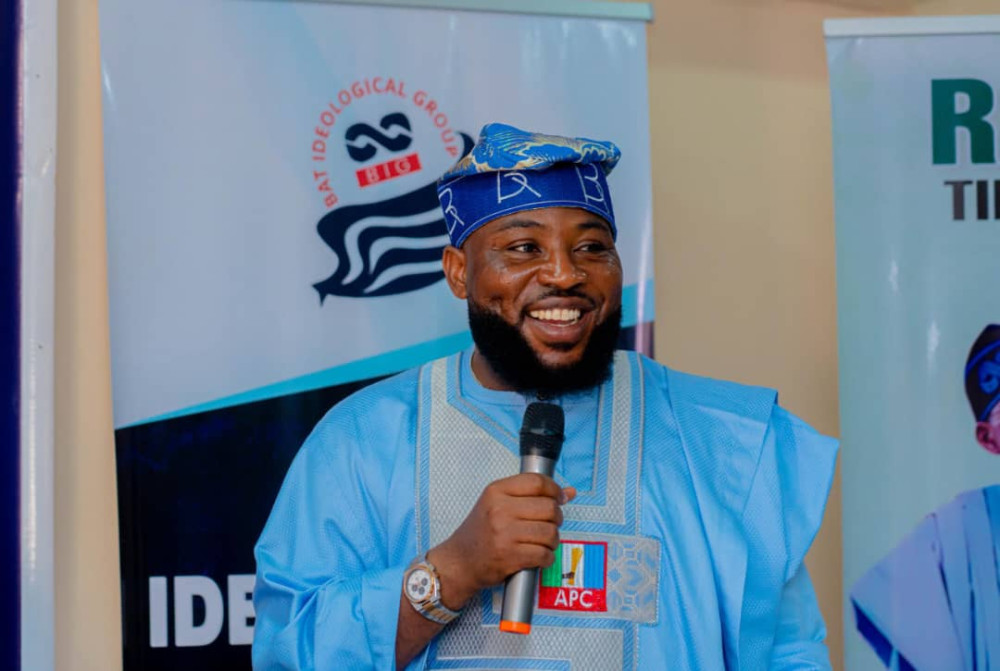
Comrade Bamidele Atoyebi is the Convener of Bola Ahmed Tinubu Ideological Group, National Coordinator of Accountability and Policy Monitoring PR and a Publisher of Unfiltered and Mining Reports.





Comment on this Post
Comments (0)