
NEWS
PoliticsCriminal Groups Use Mining Proceeds to Buy Arms, Explains Mufywang on Plateau Crisis
By Emmanuel Oluwafemi Oniyide | 13th Nov 2026 | 1:34 PM
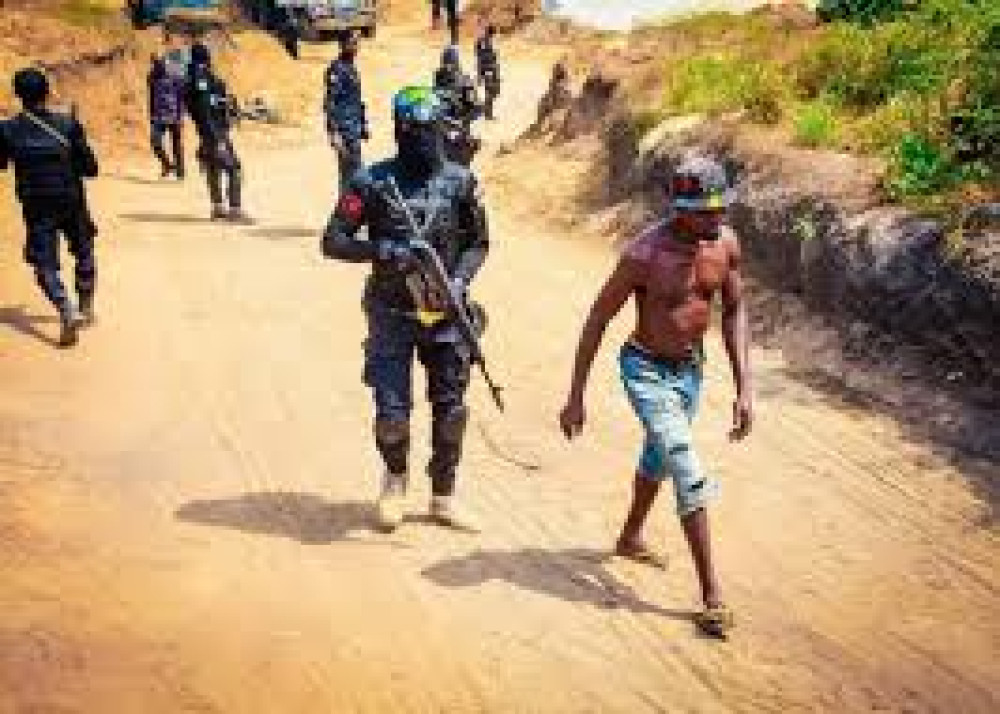

Plateau State Governor, Caleb Mutfwang has said criminal groups operating in the state are using proceeds from illegal mining of lithium, tin and other minerals to purchase weapons, a statement that adds an economic dimension to a conflict often framed primarily in religious and ethnic terms.
Mutfwang, speaking in an interview with Leadership, said intelligence and security reports had established a link between mining revenue and arms procurement by criminal elements. “Criminal groups are using proceeds from mining to buy arms,” the governor said. “This is not speculation; it is a documented business practice”.
Plateau State sits on significant deposits of tin, columbite, lithium and gold. Tin mining in the Jos Plateau dates back more than a century, and the collapse of the formal mining sector left behind thousands of abandoned pits that artisanal miners now work informally.
The global lithium boom has added new demand, with Plateau among the states identified as having commercially viable lithium deposits.
The governor’s statement aligns with earlier findings by security analysts and international organisations. The Global Initiative Against Transnational Organised Crime has reported that artisanal gold mining has become a key revenue stream for armed groups in North-West Nigeria since 2023.
In Plateau, the link between mining and arms is less well documented but has been repeatedly raised by community leaders and security sources.
The Plateau crisis is often described as a conflict between largely Muslim Fulani herders and predominantly Christian farming communities.
But analysts note that the violence is shaped by multiple factors: competition over land and water, the collapse of traditional conflict-resolution mechanisms, the proliferation of small arms, and the political economy of mineral extraction.
The mining dimension is significant because it provides a sustainable revenue source for armed groups. Unlike cattle rustling, which yields one-off returns, mining can generate continuous income — and the proceeds can be converted into weapons, ammunition and logistics.
The Plateau State Government has banned night mining in some communities and has called for stronger federal enforcement against illegal mining. The state has also pushed for the deployment of additional security personnel and surveillance technology.
At the federal level, the Ministry of Solid Minerals Development has said it is working with security agencies to curb illegal mining, but enforcement remains constrained by limited resources and the vast geography of mineral-rich areas.
The governor’s statement raises a policy question: if mining proceeds are financing armed groups, then regulating mining is not only an economic imperative but a security one. Formalising artisanal miners, licensing and monitoring operations, and ensuring that mineral revenues flow through transparent channels could reduce the financial space available to criminal networks.
But formalisation is slow and contested. Many artisanal miners operate informally because the licensing process is complex and centralised. Criminal groups exploit that informality, inserting themselves into supply chains and taxing or coercing miners.
The Plateau crisis cannot be understood without reference to the minerals beneath the ground. The governor’s statement is a reminder that the violence is not only about identity or land — it is also about resources, and about who controls the revenue they generate. Addressing the conflict will require not only security responses but also governance of the mining sector that denies criminal groups the financial oxygen they need to sustain their operations.





Comment on this Post
Comments (0)