
NEWS
PoliticsDangote, Ethiopia, Djibouti Break Ground on $660 Million Refined Petroleum Pipeline
By Emmanuel Oluwafemi Oniyide | 25th Sep 2026 | 1:35 PM
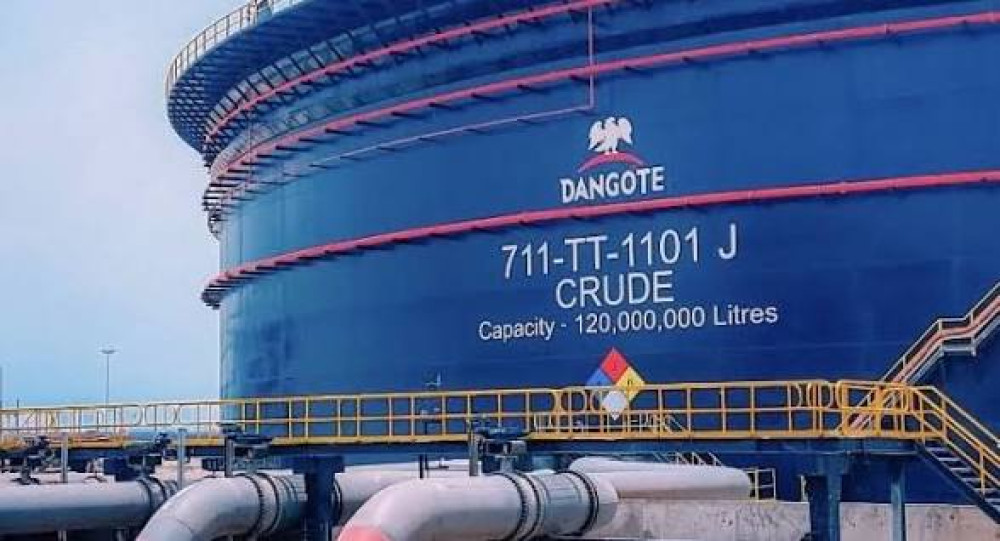

Nigerian industrialist, Aliko Dangote, the Ethiopian government and Djibouti have broken ground on a $660-million project to build a 120-kilometre refined petroleum products pipeline linking landlocked Ethiopia to Djibouti’s coast, a landmark infrastructure investment expected to cut logistics costs and strengthen energy security in the Horn of Africa.
The project — known as the Damarjog-Dewele Oil Terminal and Pipeline Project — was announced on Thursday, September 24, 2026, during Ethiopian Prime Minister Abiy Ahmed’s visit to Djibouti, where he met with Djiboutian President Ismail Omar Guelleh and Dangote.
The groundbreaking ceremony was held at the Damerjog Industrial Development Free Trade Zone in Djibouti.
Project Details
The multiproduct pipeline will connect marine and coastal storage facilities at Damerjog in Djibouti with inland storage and distribution facilities at Dewele in Ethiopia. The project will include approximately 375,000 cubic metres of storage capacity at Damerjog and 800,000 cubic metres at Dewele — a combined capacity of about 1.175 million cubic metres.
The pipeline is expected to become operational within 18 months. It will move jet fuel, diesel and petrol from Djibouti’s coast into Ethiopia, replacing a significant portion of the tanker-truck transportation that currently dominates the corridor. Ethiopia has had no direct sea access since Eritrea’s independence in 1993 and relies on Djibouti as its main maritime gateway, with more than 90 per cent of its imports and exports passing through Djiboutian ports.
Partnership Structure
The project is being developed through a partnership between Ethiopian Investment Holdings (EIH), the Dangote Group, and Djibouti’s state-owned Great Horn Investment Holding. A memorandum of understanding was signed between the partners to advance the development. EIH is Ethiopia’s state-owned company that manages government investments.
Leaders Hail African-Led Investment
Prime Minister, Abiy described the project as “more than a pipeline” and “an investment in future growth, regional integration, and a more secure shared economic future, with African investment at its centre.” He said the pipeline would provide a “modern, dependable, and cost-effective system for transporting refined petroleum products into the country, thereby enhancing our energy security and reducing supply-chain vulnerabilities.”
President Guelleh said the project marked “an important chapter in Djibouti’s journey toward becoming a premier centre for logistics, energy, and industrial development.” He added that the investment would increase trade volumes, expand port operations, attract additional investment and create thousands of direct and indirect jobs. “We are proud to partner with the Dangote Group in delivering a project that demonstrates the strength of African-led investment and practical African solutions to African challenges,” he said.
Aliko Dangote, President and Chief Executive of Dangote Industries Limited, said the project was part of the group’s broader efforts to develop infrastructure that supports Africa’s economic growth and self-sufficiency. “This project is designed to enhance energy security, improve supply-chain efficiency, and create sustainable economic value for both Djibouti and Ethiopia,” he said.
Dangote’s Expanding East African Footprint
The pipeline extends an existing industrial partnership between EIH and Dangote in Ethiopia, where the two are developing a fertiliser complex in Gode, in the Somali region. The project was initially valued at $2.5 billion and designed to produce three million tonnes of urea annually, but its scope has since expanded to more than $4 billion, including an NPK fertiliser unit, a 120 MW power plant, a 110-kilometre gas pipeline and a polypropylene packaging facility.
Dangote is also expanding its energy interests elsewhere in East Africa. In Kenya, the group is expected to work with the government on the construction of a 700,000-barrel-per-day refinery in Lamu, following the successful completion of the Dangote Petroleum Refinery in Nigeria.





Comment on this Post
Comments (0)