
NEWS
PoliticsGhana Rules Out Amnesty for Illegal Miners, Says Operations Must Stop Before Licensing
By Emmanuel Oluwafemi Oniyide | 27th Oct 2026 | 11:45 AM
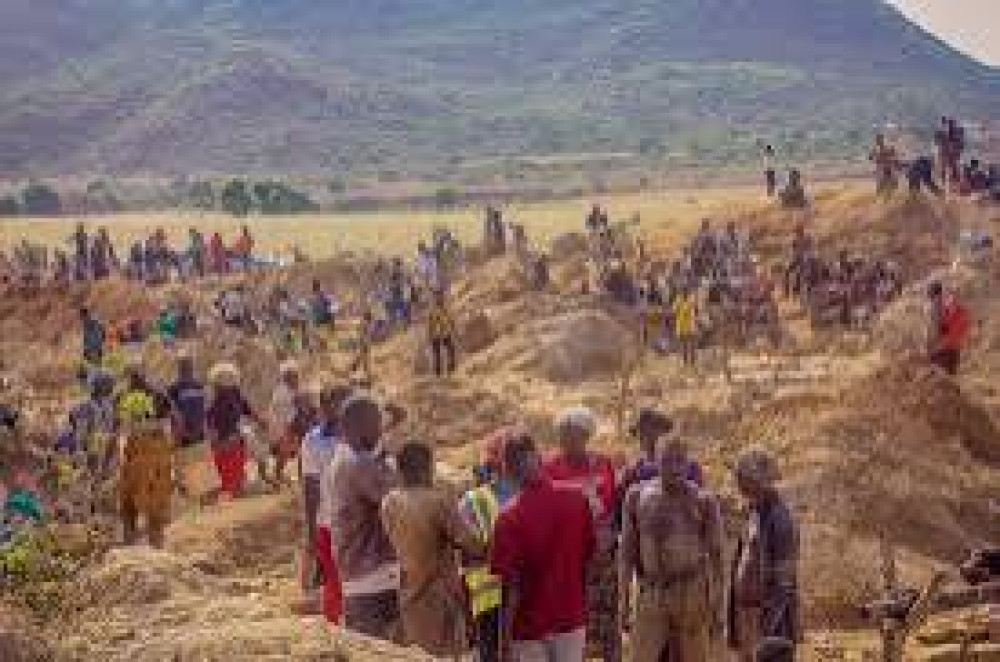

Ghana has ruled out an amnesty for illegal miners, saying its formalisation policy is a structured compliance pathway for eligible artisanal operators — not a blanket exemption from the law.
The Ghana Gold Board (GoldBod) issued the clarification on 24 October 2026 after a video of Chief Executive, Sammy Gyamfi’s remarks on formalising unlicensed miners circulated on social media, prompting criticism that he had endorsed illegal mining.
GoldBod said the video was selectively edited and misrepresented comments made during a 23 March 2026 engagement with artisanal and small-scale miners.
“Formalisation is not a blanket amnesty for illegal mining; it is a structured process for bringing eligible operators into the law, subject to licensing, environmental safeguards, training and regulatory oversight,” said GoldBod’s Head of Communications, Prince Kwame Minkah. “CEO has not endorsed small scale mining which is known in our parlance as galamsey.
It is an illegality; all that he was seeking to put out there is a creative means in which we can draw them from that illegal space into a regulated Eco space.”
The Environmental Protection Agency has separately stressed that unlicensed operations must cease before miners can be assessed for regularisation. EPA Deputy Chief Executive Michael Ayamga-Adongo said mining without the required environmental approvals remains unlawful even where an operator holds other mining rights.
“If you have illegal miners in a location where you think that their operations could be regularised and brought within the legal framework, yes, the operation must be stopped,” Ayamga-Adongo said. “That is the first step. They have fallen foul of the law.”
He said operators need mineral rights, environmental approval and an operating permit before commencing extraction.
University of Ghana law professor, Kwadwo Appiagyei-Atua argued that Sections 9 and 82 of the Minerals and Mining Act, 2006 (Act 703), require mining authorisation regardless of whether operations take place outside protected areas.
“The illegality lies entirely in the sequence. The law permits registration first, then mining. The statement describes mining first, then registering,” Appiagyei-Atua wrote in an October 25 opinion piece. He maintained that subsequent registration could not retrospectively legalise unlicensed extraction.
GoldBod said Gyamfi’s remarks concerned the formalisation of eligible operators and not the endorsement of illegal mining. The board said the government’s policy was “not to legitimise illegal mining but to end illegality by bringing eligible operators into a formal regulatory framework.”
The clarification comes as GoldBod develops an Artisanal and Small-Scale Mining (ASM) Formalisation and Financing Support Programme with the Ministry of Lands and Natural Resources, the University of Mines and Technology, and the Mineral Income Investment Fund (MIIF). Rand Refinery SA is providing technical support.
The programme is intended to support formalisation and financing for artisanal and small-scale miners while increasing production, mineral revenues and employment, and reducing the environmental degradation associated with unregulated mining.
Gyamfi said at the 2026 Mining in Motion Summit that mining regulation must be “firm, practical and inclusive,” going beyond policing miners to include formalisation, capacity building and opportunities through compliance.
The dispute comes as Ghana intensifies efforts to curb illegal mining, known locally as galamsey, while expanding formalisation and responsible sourcing across its gold sector. GoldBod reported on 20 October 2026 that it had aggregated and exported 85.4 tonnes of artisanal and small-scale gold worth $11.6 billion since January 1, compared with 76 tonnes in the same period the previous year.
The figures underline the economic weight of the ASM sector — and why the distinction between formalisation and amnesty is politically sensitive. They do not resolve the legal question at the centre of the dispute: whether registration can follow extraction.
The clarification draws a line between two propositions that had become conflated in public debate: that eligible unlicensed miners should be given a pathway into the formal sector, and that illegal mining should be tolerated. GoldBod’s position is that the first is possible only through the second being enforced — operations must stop, environmental approvals must be obtained, and licensing must precede extraction.
The test is implementation. In communities where artisanal mining is a primary livelihood, enforcement without a credible, funded and fast formalisation pathway risks displacing miners rather than reducing illegal mining. Whether the programme can sequence stopping, assessing, licensing and financing in practice will determine whether Ghana’s formalisation drive reduces illegal mining or simply relocates it.





Comment on this Post
Comments (0)