
NEWS
PoliticsNigeria Bets on Chinese Partners to Revive Decades-long Moribund Refineries
By Emmanuel Oluwafemi Oniyide | 6th Jul 2026 | 9:19 AM
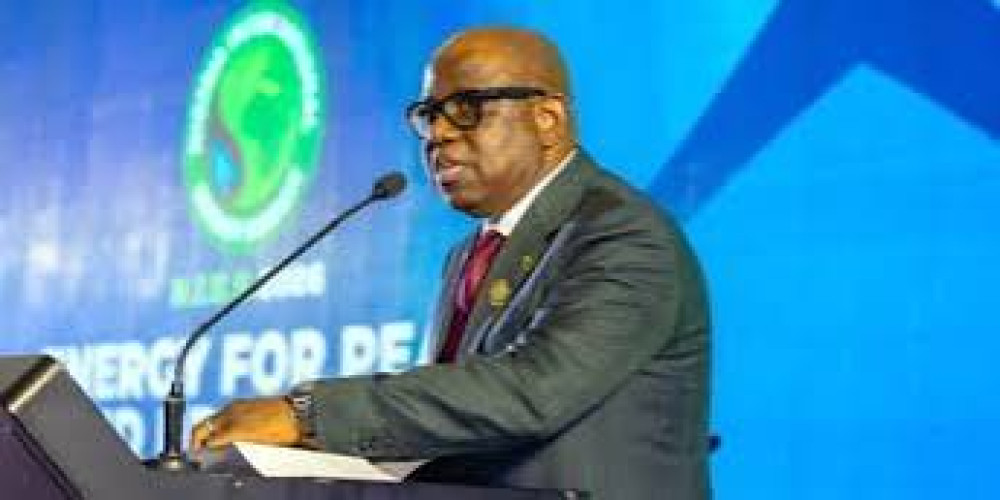

Nigeria's state-owned oil company says it is taking a different approach to reviving two of the country's largest refineries, signalling a shift from years of government-funded rehabilitation projects towards a commercial partnership model backed by foreign investors.
The Nigerian National Petroleum Company Limited said the memorandum of understanding it signed with two Chinese companies to rehabilitate and operate the Port Harcourt and Warri refineries has entered a detailed technical and commercial evaluation phase, stressing that no final investment agreement has yet been reached.
Group Chief Executive Officer, Bayo Ojulari said the evaluation is intended to determine whether the proposed partnership can deliver profitable and self-sustaining refining operations rather than another round of temporary repairs.
"Fixing a refinery takes more than pipes and pumps. It takes the right partners," Ojulari said, adding that the memorandum is only a framework for exploring cooperation and should not be interpreted as a binding contract.
Unlike previous rehabilitation programmes financed largely through public resources, the prospective Chinese partners are expected to bear the cost of the due diligence process, allowing technical, financial and operational assessments to be completed before either side makes long-term commitments.
The latest development follows an agreement signed in April between NNPC and China's Sanjiang Chemical Company Limited and Xinganchen (Fuzhou) Industrial Park Operation and Management Co. Ltd. to explore the rehabilitation, operation and possible expansion of the Port Harcourt and Warri refineries under a technical equity partnership.
According to NNPC, discussions extend beyond refining and could include investments in petrochemicals and gas-based industries, including methanol production, as part of efforts to improve the commercial value of Nigeria's downstream energy sector.
Nigeria is Africa's largest crude oil producer, yet it has relied heavily on imported petroleum products for years because its state-owned refineries have struggled to operate consistently. The Port Harcourt refinery has a combined installed capacity of 210,000 barrels per day, while the Warri refinery can process 125,000 barrels per day. Together with the Kaduna refinery, they represent about 445,000 barrels per day of state-owned refining capacity. Despite repeated rehabilitation programmes costing billions of dollars over several administrations, the facilities have suffered frequent shutdowns and low utilisation rates.
The repeated setbacks have intensified debate over whether government should continue funding refinery repairs or bring in experienced private operators capable of running the assets on commercial terms. The pressure has grown further since the launch of the 650,000-barrels-per-day Dangote Refinery, which has significantly altered Nigeria's downstream fuel market and raised expectations that domestic refining can operate profitably at scale.
For NNPC, the proposed Chinese partnership represents more than another rehabilitation effort. It is an attempt to prove that Nigeria's state-owned refineries can eventually compete in a market that is becoming increasingly driven by efficiency, private investment and commercial returns.




Comment on this Post
Comments (0)