
NEWS
PoliticsWhy Under 50 Politicians Aiming to Build Lasting Political Legacy Should Understudy Tinubu School of Politics
By Bamidele Atoyebi | 30th Oct 2026 | 11:30 AM

Sometimes, a single political moment can stoke questions that years of political commentary have failed to answer. It can make you pause, look beyond the immediate spectacle and begin to examine the deeper forces shaping relationships, alliances and the distribution of power in a country.
That was my reaction when I came across the trending video surrounding President Bola Ahmed Tinubu’s trip to Saudi Arabia for Umrah. Beyond the familiar sight of political officeholders around the President, what interested me was the broader question of political influence, relationships and the ability to maintain relevance across political divides.
For me, the real lesson is not simply about who was seen with whom. It is about what aspiring politicians can learn from the political career of a man who has remained a central figure in Nigerian politics for decades.
It is a subject that deserves serious study, particularly among politicians aged 50 and below who hope to build institutions, sustain political relevance and leave a legacy that outlives their time in office.
There is also another interesting dimension to the changing political environment. For many years, particularly since 1999, political cooperation across party lines was often treated as an act of disloyalty or anti-party activity. Politicians who associated with members of other political parties could face accusations, disciplinary measures and sanctions from their own parties.
However, the political atmosphere appears to be gradually making more room for engagement beyond party boundaries. Under Tinubu’s political leadership, there is an opportunity to encourage a more collaborative and less hostile political culture where politicians can maintain their party identities while engaging with others, exchanging ideas and cooperating on issues of national interest.
This is an important development because democracy should not make political opponents permanent enemies. Competition should remain healthy, and political differences should not prevent meaningful relationships or constructive engagement.
This is why I believe Nigeria needs a serious political imparting institution built around the study of President Tinubu’s political methods, strategic decisions, coalition-building and leadership philosophy.
Through the Bola Ahmed Tinubu School of Politics, or an institution developed under the broader vision of the Bola Ahmed Tinubu Institute of Governance, younger politicians could examine the principles, decisions and experiences that have shaped his political journey.
The issue becomes even more interesting when we consider Governor Bala Mohammed of Bauchi State. The governor defected from the Peoples Democratic Party to the Allied Peoples Movement in May 2026, while Governor Seyi Makinde of Oyo State emerged as the APM’s presidential candidate ahead of the 2027 election.
These are significant political developments because they show that the political landscape cannot be understood through party labels alone.
Any interaction between leaders from different political camps naturally invites public scrutiny. However, political proximity should not automatically be interpreted as an endorsement, and a photograph or video alone cannot establish a politician’s electoral position.
The more important question is what such moments reveal about the continuing relevance of relationships, negotiation and strategic engagement in Nigerian politics.
That is where Tinubu’s political story becomes particularly instructive.
How does a politician build a political structure that survives electoral defeats, internal disagreements, changing alliances and years outside the highest levels of government?
How does a political leader maintain relationships with people who may have competing ambitions? How does he bring former adversaries into the same political conversation and create room for cooperation without requiring everyone to share the same history?
These are not trivial questions. They are questions that every serious student of politics should be asking.
President Tinubu’s political journey offers a substantial body of experience for anyone interested in finding answers. His political roots in the pro-democracy movement, his emergence as governor of Lagos State in 1999, his survival as the only Alliance for Democracy governor in the South-West after the 2003 elections, and his subsequent role in the development of opposition political platforms all provide important material for political study.
His influence did not end when he left office as governor in 2007. Rather, his political relevance endured and blossomed through party organisation, strategic alliances, succession arrangements and the cultivation of political relationships across different levels of government.
His role in the formation of the All Progressives Congress and the coalition that produced the party’s historic victory in the 2015 presidential election remains an important part of that story.
These developments did not happen by accident. They involved political organisation, negotiations, institutional relationships and an understanding of the interests that motivate different actors.
They also involved setbacks, disagreements and difficult calculations.
A serious political student should be interested in understanding both the successes and the controversies surrounding this journey. Political education is not the business of pretending that a leader has never made a mistake.
It is the disciplined examination of decisions, their consequences and the lessons that accrue from them.
One of the most striking features of Tinubu’s political career is the importance he has placed on maintaining a political network beyond the boundaries of a single office.
Many politicians build their relevance around the authority attached to their present position. Once they leave that position, their influence begins to wane because they have not built on foundations of relationships or institutions capable of surviving their departure.
Tinubu’s experience presents a different case for examination. His political influence remained significant even when he was no longer a governor and did not occupy the presidency.
That continuity raises important questions about organisation, political investment, loyalty, succession and the relationship between personal influence and institutional structures.
The question is not merely how much money a politician possesses. Money can help mobilise support, but it cannot independently explain or sustain every political alliance, every act of reconciliation or every long-term relationship.
If financial resources were sufficient on their own, every wealthy politician would command a durable national political structure.
Political relationships are more complicated than that. They involve shared interests, trust, bargaining, strategic patience, the distribution of opportunities and the ability to recognise what different people bring to a common undertaking.
This is why I disagree with the tendency to explain every political alignment around Tinubu as a consequence of money, appointments or coercion.
Such explanations may form part of the debate, and every administration should be scrutinised over how public resources and political appointments are used. But reducing an entire political career to financial inducements is too simplistic.
There is a difference between purchasing temporary support and building a lasting political coalition capable of surviving changing circumstances.
There is also a difference between having followers because of the office one occupies and maintaining relationships with people who continue to recognise the value of working together when the circumstances change.
That distinction deserves to be studied.
The experience of Lagos State under Tinubu also provides an important case study. After completing his two terms as governor, he supported the emergence of Babatunde Raji Fashola as his successor.
Fashola subsequently governed Lagos for two terms, followed by Akinwunmi Ambode and Babajide Sanwo-Olu.
The political tensions and disagreements that accompanied some of these transitions are equally important to examine, but the broader question of political continuity remains relevant.
How does a political organisation maintain a recognizable and enduring governing tradition across successive administrations? What role do party structures, advisers, political elders, technocrats and local networks play?
How can succession be managed without undermining institutions or reducing public office to the private possession of an individual?
These are questions worthy of interrogation for a school of politics, not merely for campaign rallies.
The Carnegie Endowment for International Peace, in its research on governance in Lagos, examined how political incentives, bureaucratic capacity, relationships with social groups and continuity between administrations influenced the state’s reform experience.
That analysis reinforces the point that political durability cannot be understood through personality alone. It must also be examined through institutions, policy choices and the relationships between leaders and the people they govern.
There is another lesson younger politicians should pause and ponder on: the ability to work with people whose ambitions differ from yours.
Nigerian politics is full of politicians who interpret disagreement as betrayal and competition as a personal insult. Some build their political careers around the destruction of opponents rather than the development of their own organisations.
Others spend so much time fighting yesterday’s battles that they lose sight of tomorrow’s opportunities.
Yet politics requires the ability to negotiate without surrendering one’s principles, disagree without destroying every relationship and compete without making reconciliation impossible.
Tinubu’s career offers several examples of shifting political alliances and relationships with former opponents. The circumstances surrounding these alliances differ, and they should not all be celebrated uncritically.
Nevertheless, the capacity to negotiate across political divides is an essential subject for anyone seeking to understand how broad coalitions are built and maintained.
Forgiveness, in this context, is not the same as forgetting political lessons or abandoning caution. It is the recognition that a lasting political project cannot always be sustained by personal grievances.
A leader who wants to build something bigger than himself must learn to distinguish between disagreements that can be resolved, interests that can be negotiated and conflicts that require firm boundaries.
This is particularly important for politicians who are still below 50. At that stage of a political career, the temptation to pursue immediate recognition can be overwhelming.
A newly elected officeholder may begin to imagine that winning one election is proof that he has mastered politics. A local political leader may mistake a small following for a permanent political base. A governor may believe that the authority of the office automatically guarantees influence after leaving it.
Political history repeatedly demonstrates otherwise.
Electoral victory is an achievement, but building a lasting political institution is a different undertaking altogether. It requires patience, a clear understanding of the political environment, the ability to develop people, a willingness to negotiate and a realistic appreciation of the limits of personal power.
The most useful political education is therefore not a collection of slogans about winning elections. It is an examination of how political organisations are built, how institutions are sustained, how successors are prepared, how conflicts are resolved and how policy decisions affect public confidence.
Tinubu’s political methods also deserve examination in the area of executive administration. His experience in Lagos raises questions about the relationship between political leadership and the civil service, the selection of capable officials, the management of competing interests and the translation of political priorities into administrative action.
No serious student should assume that every administrative outcome in Lagos was perfect or that every difficulty faced by the Tinubu administration at the federal level has been resolved.
The purpose of studying leadership is to understand what works, what fails, why particular decisions produce particular outcomes and how those lessons can be adapted to different circumstances.
Politics without policy is merely a struggle for office. A political leader may be excellent at building alliances, but those alliances must ultimately serve a public purpose.
They must produce institutions that function, public services that improve and decisions that respond to the needs of citizens.
This is why a Tinubu School of Politics should go beyond teaching electoral strategy. It should examine governance, public finance, legislative relations, federalism, political communication, negotiation, conflict resolution, succession planning and the ethics of public leadership.
It should also teach younger politicians how to measure the consequences of their decisions against the interests of the people they represent.
The recent comments of Abia State Governor, Alex Otti illustrates another dimension of the discussion. Otti, a member of the Labour Party and an opposition governor, has publicly defended aspects of Tinubu’s economic reforms, including the removal of petrol subsidy, while maintaining his own political identity and presidential preferences.
In September 2026, he made clear that his support for certain presidential policies should not automatically be interpreted as an endorsement of Tinubu’s re-election bid.
That distinction is worth noting. Political cooperation does not always mean political surrender, just as belonging to the opposition does not require rejecting every policy introduced by the government.
Mature politics should allow room for independent judgement, issue-based cooperation and honest disagreement.
There is, however, another dimension of Tinubu’s political strategy that deserves attention: religious diplomacy and the ability to communicate national inclusiveness beyond Nigeria’s borders.
When US President Donald Trump raised concerns about the killing of Christians in Nigeria and the issue attracted international attention, the Tinubu administration responded through diplomatic engagement, including the First Lady’s participation in the US National Prayer Breakfast in Washington, D.C., in February 2026.
President Trump publicly acknowledged Senator Oluremi Tinubu at the gathering, describing her as a very respected woman and recognising her role as a Christian pastor.
That moment carried an important symbolic message. It presented a Nigerian President who is Muslim and a First Lady who is a Christian pastor, demonstrating that religious differences need not become barriers to national unity or international engagement.
Now, with Tinubu’s participation in Umrah in Saudi Arabia, there is another opportunity to communicate a message of religious tolerance and coexistence.
The strategic significance lies in the balance: engaging Christian communities and institutions while also identifying with the Muslim faith and its practices.
This is a lesson in political communication, soft power and diplomatic strategy. Beyond managing political relationships across party lines, a leader must understand how to manage religious perceptions, build confidence among different faith communities and communicate inclusiveness to the international community.
Young politicians should study this approach because religious tolerance is not merely a domestic political responsibility; it is also an important component of national image, diplomacy and leadership.
For Tinubu’s admirers, the lesson is not that every politician must abandon personal ambition or join the ruling party. It is that serious political leaders should study how influence is developed, how coalitions are negotiated and how a political organisation can remain relevant through changing circumstances.
Indeed, if a younger politician wishes to challenge Tinubu electorally, that politician has even more reason to understand the political architecture he is seeking to overcome.
You cannot effectively challenge a political strategy you have never taken the time to understand.
This is the spirit in which I advocate a Tinubu School of Politics. It should not become a shrine to personality or a platform for compulsory praise.
It should become a serious centre of political learning where his supporters, critics, aspiring officeholders, public administrators and researchers can examine the decisions and considerations that have shaped his career and draw lessons applicable to Nigeria and the wider African continent.
The proposed Bola Ahmed Tinubu Institute of Governance could provide a broader framework for such work, combining political history with research into public administration, policy implementation, leadership development and democratic institutions.
Tinubu’s political career is not without controversy, and his presidency must be assessed against the economic realities, security challenges and public expectations facing Nigerians.
His reforms, political choices and governance record should remain open to scrutiny. That scrutiny does not diminish the value of studying his political experience. If anything, it makes the exercise more useful.
We must also distinguish political loyalty from political competence. A school of politics should produce people who can think, analyse, negotiate and govern, not merely repeat the opinions of a political leader.
Its graduates should be able to explain why a strategy worked, identify where it failed and determine whether it can be applied successfully in another state or political environment.
That is how political knowledge becomes useful beyond the lifetime of the person being studied.
President Tinubu’s story demonstrates that Nigerian politics is not simply about who wins an election today. It is also about who builds relationships, develops institutions, manages competing ambitions and remains relevant when the immediate circumstances change.
His political career provides an opportunity to examine these questions in considerable depth.
For politicians aged 50 and below who want to build a lasting political legacy, the message is straightforward: do not study politics only when an election is approaching.
Study it before you seek office, while you occupy office and after you leave office. Learn the history of political organisations. Understand the interests of the people you hope to lead. Build relationships that can withstand the test of time.
Develop competent people. Learn to negotiate, and remember that political influence is invaluable when it contributes to effective governance.
Above all, understand that ambition without preparation is fragile, power without institutions is temporary, and victory without a lasting contribution to society is an incomplete achievement.
Tinubu’s political journey offers a substantial classroom for anyone willing to learn. The responsibility now is to build the kind of institution that can turn that experience into disciplined political education for a new generation.
If Nigeria’s younger politicians are serious about building political legacies that will endure beyond their time in office, then the proposed Tinubu School of Politics deserves serious consideration.
The objective should not be to produce another Tinubu in every state and ramifications. Rather, it should be to produce a generation of politicians who understand the demands of leadership, the complexities of political organisation and the accruing responsibility that comes with political power.
More importantly, it should produce independent thinkers who can interrogate existing methods, develop more logical and effective political strategies and even surpass the achievements of the leaders from whom they have learnt.
After all, one of the greatest joys and honours of a leader is to raise people who can eventually outperform him, take his lessons further and achieve even greater heights and goals with the opportunities and knowledge he has provided.
A true political mentor should not be threatened by the emergence of a more capable successor. He should take pride in knowing that the people he helped prepare have become better equipped to lead, innovate and deliver greater results.
That, in my view, would be the ultimate expression of a lasting political legacy.
Grace is graded in levels, so there is always another level of grace. Faith is in levels, so there is always another level of faith. Anointing is in levels, so there is always another level of anointing.
Breakthrough is in levels, so there is always another level of breakthrough. Favour is in levels, so there is always another level of favour. Mercy is in levels, so there is always another level of mercy.
Political capacity is in levels, so there is always another level of political capacity. Political strategy is in levels, so there is always another level of political strategy.
If there is any politician who embodies these qualities, I believe President Tinubu possesses them in quantum.
That is why more young politicians need to tap into these political graces, learn from his experiences and strive to attain even greater levels of political capacity, strategic thinking and leadership.
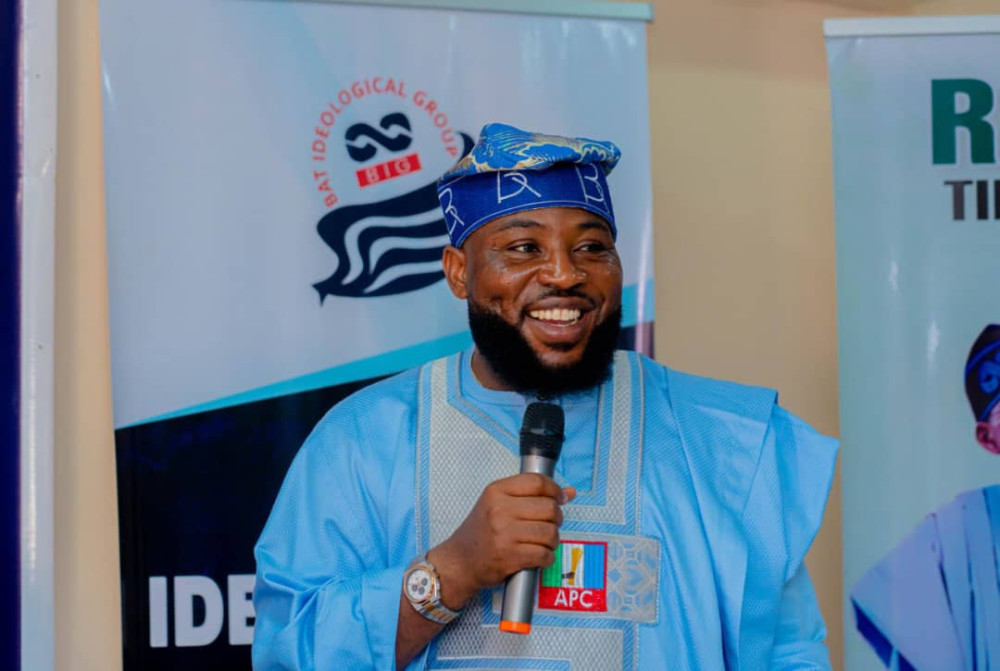
Comrade Bamidele Atoyebi is the Convenor of the Bola Ahmed Tinubu Ideological Group, National Coordinator of Accountability and Policy Monitoring PR and a Publisher of Unfiltered and Mining reports.





Comment on this Post
Comments (0)