
NEWS
PoliticsAkin Ogunbiyi’s Viral Video Corroborates My Long-Standing Heart-Cry
By Bamidele Atoyebi | 22nd Aug 2026 | 2:09 PM
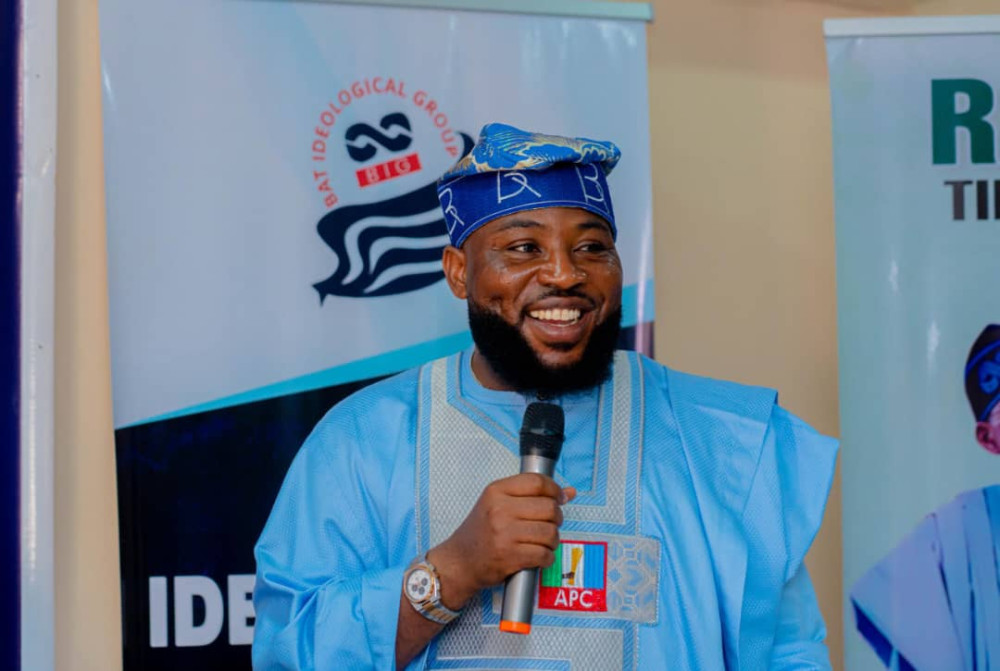

You cannot be vindictive and claim that you are from the Tinubu school of politics.
That is the lesson I draw from the revelations made by Akin Ogunbiyi about what happened behind the scenes in the political events that eventually shaped the Osun State governorship contest.
What Ogunbiyi revealed is particularly instructive because it exposes a dimension of political conduct that many people outside the immediate circle may never have known. According to his account, President Bola Ahmed Tinubu had made his own position clear. The President did not expect the APC to produce the candidate it eventually produced and had invited Ademola Adeleke because, in his words, he wanted to “send money and make things easy for me.”
More importantly, Ogunbiyi’s account attributes the following direct words to the President concerning Gboyega Oyetola:
“People from Osun, I didn’t expect a governorship candidate from you. That’s why I invited Ademola Adeleke, because he would send money and make things easy for me. But Oyetola, it’s you that said you don’t want him. Now, how you’ll win Osun is on you.”
Those words, as reported by Ogunbiyi, are significant. They show that the President’s thinking, at least from the account presented, was not simply about personal preference or the exclusion of an individual. It was about finding a political route to victory and entrusting the responsibility to the person he believed could deliver it.
That revelation, for me, raises a much bigger question than the outcome of one election:
What exactly does it mean to say that you belong to the political school of Asiwaju Bola Ahmed Tinubu?
Because politics, as I understand it from studying Tinubu’s leadership over the years, cannot be reduced to personal vindictiveness, exclusion, resentment or an obsession with preventing another person from having access to the political space.
You cannot simply wear the cap of Tinubu politics and assume that the cap itself makes you a student of his school.
The school is not the cap. The school is the character.
It is the political philosophy.
It is the ability to accommodate people.
It is the ability to build coalitions.
It is the wisdom to recognise that today’s opponent can become tomorrow’s ally.
It is the courage to put the larger political objective above personal grievances.
And, most importantly, it is the understanding that politics is about building people and structures that outlive individual interests.
That is why the revelations attributed to Ogunbiyi deserve serious reflection.
I have heard and studied enough of the history of Tinubu’s political journey to understand that his greatest strength has never simply been his ability to win elections. His strength has been his ability to build political structures, identify talent, accommodate people from different backgrounds and create room for people who may eventually become political forces in their own right.
That is a very different thing from trying to eliminate somebody simply because you do not like the person.
And this is where I become concerned about some of the people who claim to operate under the Tinubu ideological umbrella.
There is a difference between being around Tinubu and understanding Tinubu.
There is a difference between dropping the President’s name and carrying his leadership philosophy.
There is a difference between wearing the colours of a political movement and actually understanding the principles that produced the movement.
I have said this repeatedly: many of our political appointees and political actors require proper training, mentorship and coaching to understand the President’s leadership principles, governance philosophy, courage, wisdom and political methodology.
You cannot simply say, “I know Tinubu,” because you have access to him.
You cannot say, “I am Tinubu’s man,” because you have been appointed.
You cannot invoke the President’s name every time you want to get something done and assume that you have automatically inherited his political wisdom.
Political impartation is not proximity.
Proximity can give you access.
But understanding requires study.
It requires humility.
It requires observation.
It requires discipline.
It requires the willingness to learn and towing the principles that have sustained it.
This is why I have always said that tapping into political spirit is not simply about being around the source. If you do not respect the source, if you do not crave what the source carries and if you do not deliberately study the source, you cannot genuinely reproduce what that source represents.
The Bible asks: “Who has believed our report? and to whom is the arm of the Lord revealed?”
There is a difference between seeing something and receiving it.
There is a difference between standing around a leader and understanding the leadership principles that made that leader successful.
And this is particularly important today because President Tinubu is ageing, and no leader remains physically present forever.
Nigeria therefore needs people who understand the President’s principles deeply enough to carry them forward.
We cannot wait until tomorrow, when President Tinubu is no longer actively involved, before everybody begins saying, “We wish we had learnt from him.”
The time to learn is now.
The time to mentor people is now.
The time to train political actors is now.
The time to teach people the difference between Tinubu’s politics and ordinary transactional politics is now.
Because what I see sometimes is people who are interested in the benefits of Tinubu’s name without necessarily understanding the responsibility that comes with carrying that name.
And the Osun experience is a powerful lesson.
The loss of Osun State by the APC had been long in coming. The damage began with the arrogance and recklessness that characterised the twilight of former Governor Rauf Aregbesola’s administration: the half-salary regime for civil servants, non-payment of pensions, the controversies around school restructuring and uniforms, abandoned road projects, the Opon Imo tablet project and, above all, a seeming failure to manage public utterances and the party’s image. In the Oyetola era, efforts were made to repair some of that damage, but his quiet disposition, resource constraints and limited public-image rehabilitation meant that much of the damage remained in the public mind.
The APC then compounded the problem with the strategic blunder of blocking Ademola Adeleke from joining the party. In politics, one thing you must avoid is making enemies in plenty, and the Adeleke factor was particularly significant given Ede’s electoral strength and the enduring support for the Adeleke family. The broader question is also how effectively Oyetola, after three years as Minister of Marine and Blue Economy, has been able to oil the political machinery of the party in Osun and extend meaningful patronage to those who can spread prosperity at the grassroots.
The Osun experience ultimately showed that even enormous spending, including alleged vote-buying with cash and rice, may not be enough to defeat an incumbent governor with strong community support and a community that has grievances against a party brand and its handlers, even when that party has federal power.
If, as Ogunbiyi has revealed, there were efforts behind the scenes to prevent Adeleke from accessing the President or to control who could meet with the President because of political disagreements, then we must ask ourselves whether such conduct represents the politics of accommodation, strategic coalition-building and political maturity that Tinubu’s long career has demonstrated.
I am particularly struck by the account that there were instances where, whenever President Tinubu invited Adeleke, efforts were allegedly made to frustrate the meeting or ensure that the interaction did not take place freely.
If true, that is not merely a disagreement over politics.
That becomes a question of whether personal political interests are being placed above the larger interests of the party, the state and the President’s broader political objectives.
And we saw the consequences.
The election became extremely bitter.
The political contest escalated into violence.
Lives were lost.
Properties and infrastructure were destroyed.
The kind of politics that emerged looked less like the strategic, modern politics Nigerians expect in a democracy and more like the politics of another era—politics where personal grievances become so entrenched that people would rather destroy the political house than allow somebody they dislike to enter it.
That is not the politics I associate with Tinubu.
Tinubu is a political strategist.
A strategist does not fight every battle simply because he can.
A strategist understands timing.
A strategist understands alliances.
A strategist understands that political power is not sustained by eliminating everybody around you.
It is sustained by building enough relationships and structures to carry your vision forward.
This is why I have always believed that President Tinubu’s real legacy must not only be measured by the policies he implements while in office. It must also be measured by the people he successfully mentors and the political generation he leaves behind.
We need people who understand his courage.
People who understand his ability to take calculated risks.
People who understand his capacity to build institutions and political structures.
People who understand his approach to coalition-building.
People who understand that politics is ultimately about people.
And people who understand that you cannot build a progressive political movement with a vindictive mindset.
Here’s a smoother version that keeps the conviction and spiritual dimension of what you’re saying:
But who am I to tell people who President Tinubu is and how he reasons? I am simply a voice crying in the wilderness.
I am one of those whom Tinubu deliberately co-mentored in a specific and unique dimension. Yes, he has other children and thousands of mentees who are also carrying and advancing his ideology. But what makes my journey unique is that my mentorship was not merely political or intellectual; it was spiritual.
When a gift is transferred spiritually from a mentor to a protégé, there is a dimension to that relationship that goes beyond ordinary learning. In Scripture, we see that men of God did not merely transfer positions or leadership to their children; rather, there were instances where a successor received a portion, or even a double portion, of the spiritual gift and capacity of the one who mentored them.
That is why I speak with such confidence when I talk about this. Tinubu did not merely teach me from a distance. He specifically mentored me, even in ways that happened before he became President, and I believe there was a spiritual transfer that took place in that process.
So, when I speak about his vision, his reasoning and the ideology he represents, I am not claiming to know him simply because I admire him or because I am one of his thousands of mentees. I speak from a relationship of mentorship that I believe carried a deeper spiritual dimension.




Comment on this Post
Comments (0)