
NEWS
PoliticsDangote Targets $35 Billon Annual Profit by 2030, Plans $8 Billion LNG Plant in $50 Billion Africa Expansion
By Emmanuel Oluwafemi Oniyide | 28th Sep 2026 | 10:23 AM
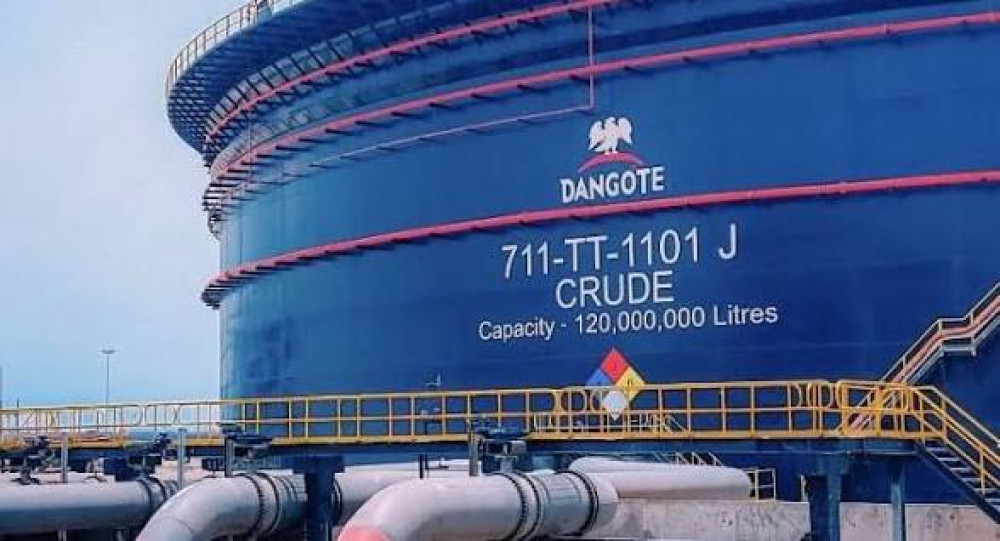

The Dangote Group has unveiled the full scope of its Vision 2030 strategy, targeting more than $115 billion in annual turnover and $35 billion in yearly profit by 2030, underpinned by nearly $50 billion in new investments across Africa, including an $8 billion liquefied natural gas plant and a new refinery in Kenya.
Aliko Dangote, President and Group Chief Executive of Dangote Industries Limited, disclosed the targets during Kenyan President William Ruto’s visit to the Dangote Petroleum Refinery and Petrochemicals Complex in Ibeju-Lekki, Lagos, at the weekend, ahead of Wednesday’s groundbreaking of the Lamu refinery in Kenya.
“We’ll have a group that can have a profit of $35 billion on an annual basis,” Dangote said, adding that the longer-term objective was to build a group potentially valued at more than $350 billion.
The planned LNG plant, with a capacity of 13 million tonnes per annum, represents an estimated $8 billion of the broader investment programme. Dangote described it as the only major component of Vision 2030 that has yet to move into full project execution.
“All these are businesses that we are already operating or planned. The only one that we have not started at ground zero is the LNG. So the contribution of the LNG is only $8 billion,” he said. “We’ll have a group that can have a profit of $35 billion on an annual basis, which we can now plan again another five years. So if you do this one, if you are going to list, it means that we can have a group worth over $350 billion”.
The Vision 2030 strategy extends beyond Dangote’s established cement, refining and fertiliser operations. The expansion pipeline covers LNG, gas infrastructure, power, mining, ports, upstream oil and gas, and additional industrial projects across Africa.
Group Chief Strategy Officer Aliyu Suleiman said the strategy was based on the objective of building African businesses capable of competing globally. “The aim of the vision is to lead Africa’s industrialisation because we realise that nobody will develop Africa but us,” Suleiman said.
Management said the capital expenditure would be supported by internally generated cash flows and committed debt financing, including funding from the Africa Finance Corporation.
The planned 700,000-barrels-per-day East Africa Refinery in Lamu, Kenya, is emerging as one of the largest projects in Dangote’s continental expansion strategy. The refinery is estimated to cost between $15 billion and $17 billion and is expected to serve Kenya and other regional markets, with plans to supply refined petroleum products to eight countries in East Africa.
Construction preparations have advanced significantly. The MV Da Yang Bai He arrived at Lamu Port on September 26 carrying 2,930.295 tonnes of project cargo. India’s state-owned Engineers India Limited has secured a contract valued at more than $450 million to provide project-management consultancy and EPCM services for the refinery.
Dangote also disclosed plans for a 1,000MW power plant at the Lamu complex, which would be larger than the power facility supporting his Lekki operations. About 500MW would be sold to the Kenyan government.
President Ruto, who toured the Lagos refinery ahead of the Lamu groundbreaking, described the Nigerian complex as a masterpiece of science and engineering with art. He said five African presidents, out of eight invited, had confirmed attendance at the Lamu groundbreaking, which will be developed by Dangote in partnership with the Kenyan government.
The Vision 2030 strategy comes as Dangote’s flagship refinery enters the Nigerian capital market. The refinery’s Initial Public Offering is offering 4.1 billion shares at ₦525 each, equivalent to a potential ₦2.15 trillion capital raise. The offer opened on September 14 and is scheduled to close on October 13, 2026.
The Nigerian Exchange has described it as the first refinery IPO in the history of the Nigerian bourse. Reuters reported that the IPO values the refinery at roughly ₦63 trillion, or about $47.6 billion, based on the offer terms. Proceeds will be used primarily for the refinery’s expansion towards 1.4 million barrels per day.
In Nigeria, the group already operates Africa’s largest cement producer, the 700,000 bpd refinery — currently being expanded towards 1.4 million bpd — a 3 million tonnes per annum fertiliser plant described as the world’s second-largest urea complex, petrochemicals, and massive gas and power infrastructure in the Lekki Free Trade Zone.
Between 2020 and 2025, the group executed a capital expenditure programme of approximately $50 billion and plans to invest twice that amount over the next five years under Vision 2030.
The scale of the targets means execution and financing will be critical. The group’s stated ambition of more than $115 billion in annual turnover and $35 billion in annual profit by 2030 depends on the successful commissioning and ramp-up of multiple capital-intensive projects alongside the continued performance of existing assets.
For international investors, the strategy places Dangote increasingly at the intersection of Africa’s energy-security, industrialisation and infrastructure-financing trends, with Nigeria serving as the group’s operational base and East Africa becoming a major new expansion market.




Comment on this Post
Comments (0)