
NEWS
PoliticsHoneywell Wins $300 Million Contract to Power Dangote’s Kenya $16bn Lamu Refinery
By Emmanuel Oluwafemi Oniyide | 1st Oct 2026 | 10:14 AM
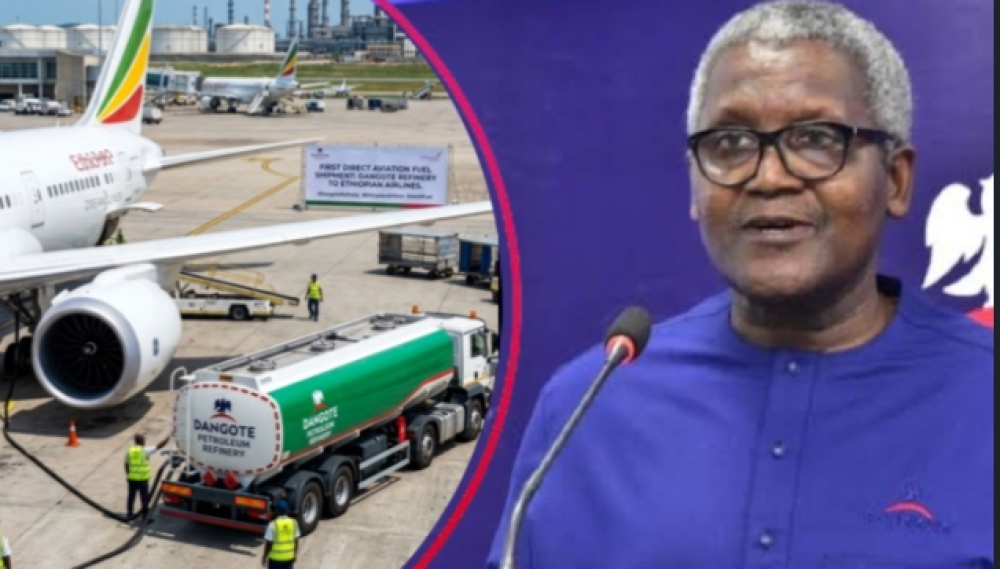

Honeywell Technologies has secured a $300 million (Sh39 billion) contract from Dangote Petroleum Refinery and Petrochemicals FZE to provide technology, engineering services, and equipment for the planned 700,000-barrel-per-day refinery in Lamu County, Kenya.
The agreement, announced on Wednesday, September 30, 2026, as Dangote and Kenyan President William Ruto broke ground on the $16 billion project, extends a decade-long partnership between the Nigerian industrialist and the US-based technology company.
Under the contract, Honeywell will provide process technologies, licensing, engineering services, proprietary catalysts, equipment, and digital solutions for the Lamu facility. The company said it will reuse proven engineering designs developed for Dangote’s 650,000-bpd Lekki refinery in Nigeria, a move expected to cut the development schedule by nearly two years — or about 30 percent — compared with a typical new refinery.
“Through our long-standing relationship with Dangote, we have developed proven large-train engineering designs that can be applied to the Kenya refinery to help significantly reduce time-to-market,” said Rajesh Gattupalli, President of Honeywell Technologies UOP.
Dangote disclosed at the groundbreaking ceremony that Honeywell UOP will earn a commission on every barrel of crude processed at the Lamu refinery. “We bought the technology from him. So for every barrel we process, he collects a commission,” Dangote said, singling out Gattupalli for recognition during his speech.
The Lamu refinery is designed to produce petrol, diesel, jet fuel, and polypropylene, with the flexibility to process a broad range of crude grades from light to heavy. This allows the facility to source crude from multiple regions — including the Middle East and the United States — rather than depending on a single supply market.
The project will also include a 1,000-megawatt power facility, with half of the electricity expected to be supplied to Kenya’s national grid. Dangote said the refinery would target the international aviation fuel market, aiming to supply at least 20 percent of jet fuel consumed by Europe and the United Kingdom.
Dangote has committed to delivering the project within 40 months. More than 110 pieces of equipment are already on site, with another 400 expected to arrive within 60 days.
The refinery is expected to create up to 60,000 direct and indirect jobs, with peak construction monthly wages estimated at $7.7 million. Dangote also announced plans to establish a training school in Lamu to train 1,000 local people for opportunities created by the refinery and associated industries.
The Lamu refinery is part of Dangote’s broader strategy to expand Africa’s refining capacity and reduce the continent’s reliance on imported refined petroleum products. “Lekki proved that it can be done. So, Lamu must prove that it can be repeated,” Dangote said.
Kenyan President William Ruto described the project as a cornerstone investment in national energy security and regional integration. “Today we turn a proposal into an industry,” Ruto said. “We transform a long-held ambition into real opportunity for Kenya, for East Africa and for Africa”.
The project has faced legal challenges from local landowners and criticism from conservationists over potential environmental and land impacts, though Dangote Group has said a Kenyan court ruling over a land rights dispute would not halt the groundbreaking.





Comment on this Post
Comments (0)