
NEWS
PoliticsNigerian Workers Urged to Demand Production-cost Petrol Pricing as Low as N435/Litre
By Emmanuel Oluwafemi Oniyide | 28th Sep 2026 | 10:23 AM
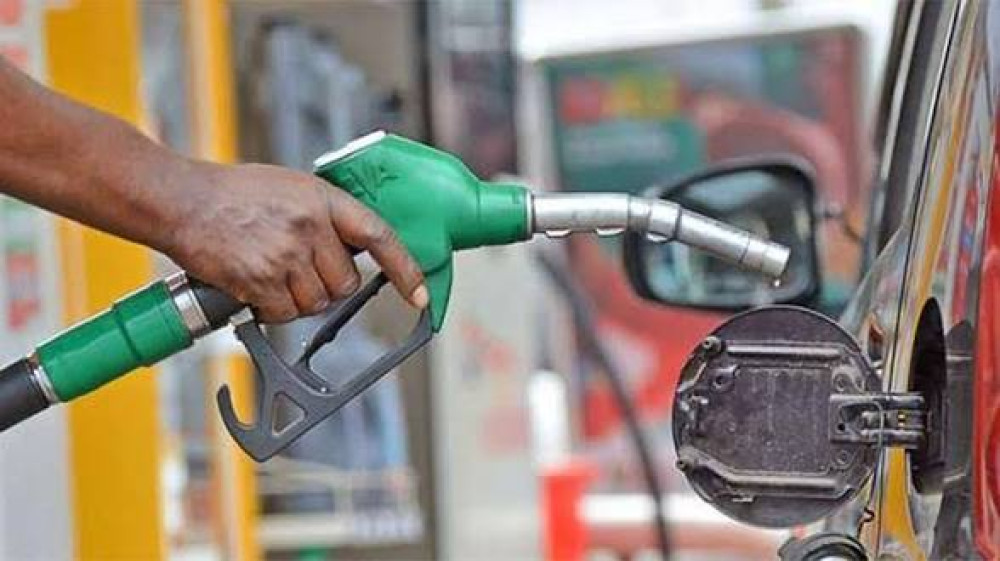

Nigerian workers have been urged to demand a production-cost pricing model for petrol that could bring the pump price down to between N435 and N687 per litre, alongside the rehabilitation of the country’s four government-owned refineries to deepen competition in the downstream petroleum market.
Petroleum engineer and economist Prof. Izielen Agbon made the call at a virtual public discussion organised by the Alliance on Surviving COVID-19 and Beyond (ASCAB) on Saturday, September 27, 2026, themed “Working Class Solutions to PMS Price Increases and Fuel Subsidy Removal”.
Agbon argued that pricing domestically refined petrol based on production costs rather than international import parity would make fuel more affordable to workers and small businesses. Under the production-cost model, PMS prices would be determined from the cost of crude oil, refining, transportation, distribution and applicable taxes, rather than the international opportunity cost used under the import-parity model.
Applying the model to the 445,000 barrels-per-day domestic crude allocation reserved for NNPCL refineries, Agbon estimated a petrol price between N435 and N687 per litre at an exchange rate of N1,333 per dollar.
He said a price of about N687 per litre would also enable NNPCL to become a price-setter and supplier of last resort in the domestic market, thereby increasing competition and challenging what he described as the oligopolistic influence of Dangote Petroleum Refinery.
Agbon maintained that the debate should not be limited to whether fuel subsidy should be removed, but should also address the pricing mechanism used to determine the cost of petroleum products in an oil-producing country. He noted that the current import-parity approach had exposed Nigerian consumers to international crude and refined-product prices as well as exchange-rate fluctuations, despite the country’s crude oil resources and domestic refining capacity.
The call aligns with demands from the Nigeria Labour Congress (NLC), which has urged the Federal Government to approve reasonable wage awards for workers, sell sufficient crude oil in naira to local refineries and expand national petroleum storage capacity.
NLC President Joe Ajaero said petrol was selling for about N1,430 per litre in major urban centres and even higher in less accessible parts of the country.
Ajaero said the increases had severely eroded workers’ purchasing power and threatened to worsen the cost-of-living crisis as transporters passed higher fuel costs to consumers.
“These new costs continue to inflict or deepen poverty among the populace, stressing the quality of life to the limits,” he said.
The NLC also rejected the importation of crude by domestic refineries, describing it as inconsistent with efforts to build local refining capacity in an oil-producing country.
The labour centre argued that government had additional fiscal room because crude oil was trading substantially above the benchmark price used for the federal budget, and that part of the additional revenue could be deployed to shield Nigerians from higher petrol prices.
Accord Party presidential candidate Dr Gbenga Olawepo-Hashim, who also spoke at the discussion, declared that under his administration, Nigerian refineries would have access to Nigerian crude oil at a strategic domestic price, giving them a cost advantage to compete aggressively in sub-regional markets and transform Nigeria into a global energy hub.
Olawepo-Hashim has proposed a starting price of N605 per litre, based on a domestic crude production cost of $45 per barrel, including NNPC and the standard industry upper-limit production cost of $30, plus a $15 margin. Additional costs include refining at $5 per barrel and distribution, transportation and insurance at $7 per barrel.
He described the conventional justification of subsidy removal as “accounting magic,” arguing that selling a domestically-produced product below an international opportunity price does not, by itself, establish that government is subsidising the product.
The push for production-cost pricing comes amid renewed debate over competition in Nigeria’s downstream sector. Dangote Refinery’s IPO prospectus, released on September 7, 2026, identified the three NNPC legacy refineries in Port Harcourt, Warri and Kaduna as potential competitors if they return to sustained commercial operations. As of June 30, 2026, Dangote Refinery accounted for about 58% of Nigeria’s total installed refining capacity and an estimated 90% or more of operational capacity.
NNPC Limited has signed a Memorandum of Understanding with two Chinese firms — Sanjiang Chemical Company Limited and Xingcheng (Fuzhou) Industrial Park Operation and Management Co. Ltd — focusing on technical partnerships to complete and operate the Port Harcourt and Warri refineries.
The agreement is expected to move beyond the old state-controlled refinery model that consistently struggled with operational inefficiency and poor maintenance.
The NLC’s position is that Nigeria’s status as an oil producer should provide some protection for citizens against international energy price shocks. “As a nation, and as a people endowed with enormous fossil resources, we are deserving of a certain level of protection or buffer against the gales from the Gulf,” Ajaero said.
The call for production-cost pricing represents a fundamental challenge to Nigeria’s current deregulated pricing framework, which ties pump prices to international market forces and exchange-rate movements. Whether the government adopts such a model will depend on its willingness to intervene in pricing mechanisms despite its stated commitment to full deregulation — and on whether the state-owned refineries can be revived to provide the competitive benchmark that would make production-cost pricing viable.
For Nigeria’s workers, the stakes are immediate: petrol at N1,430 per litre in major cities continues to erode purchasing power and push up the cost of food, transport, rent and other essentials.
The production-cost model offers a potential path to relief, but it requires both political will and functional refining capacity to become reality.





Comment on this Post
Comments (0)