
NEWS
PoliticsSmarting from Chinese Solar, Africa Now wants the Factories.
By Emmanuel Oluwafemi Oniyide | 11th Aug 2026 | 11:32 PM
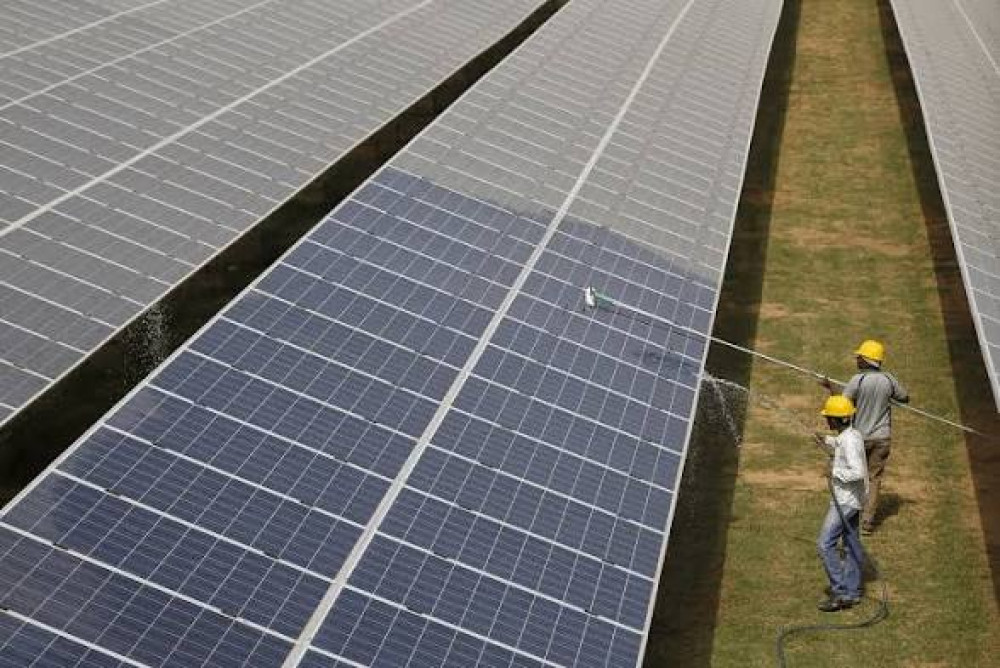

African countries imported a record 18.8 gigawatts of Chinese solar panels in 2025, up 48% from the previous year, according to the Global Electricity Review 2026 by Ember.
But a growing number of governments are no longer content to just buy the equipment.
Nigeria, South Africa, Morocco and Ethiopia are accelerating plans to manufacture solar panels and components domestically, betting that local production can create jobs and reduce dependence on Chinese imports.
China's renewable-energy investment and construction projects in Africa reached $66 billion between 2010 and 2024, according to the think tank ODI Global. Chinese manufacturers exported $114 billion worth of solar panels, wind turbines, lithium-ion batteries and electric vehicles globally in 2024.
In Kenya alone, China supplied 96% of solar panels, 81% of lithium-ion batteries and 21% of electric vehicles imported that year.
That dominance has made solar power more accessible across the continent. The industry group GOGLA estimates that more than 10 million solar kits were sold across Africa in 2025, serving roughly 148 million people. Africa installed a record 4.5 GW of new photovoltaic capacity in 2025, a 54% jump from the year before.
But nearly all of the high-value components still come from abroad.
“Most new factories assemble imported Chinese components rather than produce the high-value solar cells and other upstream materials, leaving Africa dependent on foreign technology for the most sophisticated parts of the supply chain,” said Benjamin Clarke, policy director at the Africa Solar Industry Association.
Nigeria has increased its domestic solar panel manufacturing capacity from 120 megawatts two years ago to roughly 300 megawatts today, according to Abba Aliyu of the Rural Electrification Agency. The country secured approximately $425 million in 2025 to establish eight renewable energy manufacturing facilities. Another 3.7 GW of capacity is in development. Local manufacturers now ship panels from Lagos to Accra, marking a shift from import dependence to regional supply.
South Africa's state utility Eskom is planning to build a solar photovoltaic panel manufacturing facility with a minimum output of 1 GW at one of its sites in Mpumalanga — enough to supply the electricity needs of at least 750,000 homes. The utility is seeking transaction advisers to conduct a feasibility study and develop a business case. The country remains the continent's largest importer of solar equipment, bringing in more than 3 GW annually, largely from China.
Ethiopia has become a focus of global solar manufacturing. Five Chinese companies plan to invest a total of $1.75 billion in the country, mainly in solar-cell manufacturing and mineral exploration, according to Finance Minister Ahmed Shide. Hainan Drinda New Energy Technology pledged $360 million to build a solar cell manufacturing plant, while CSI Solar will spend $250 million on a plant producing solar modules and energy-storage products. Solar photovoltaic cell exports from Ethiopia surged from nothing in early 2025 to its fourth-largest export commodity in 2026.
Morocco has doubled its solar panel production capacity to 1 GW annually. The country is also planning a 30,000-ton green polysilicon manufacturing plant in the Tan-Tan region, a project estimated to cost MAD 8 billion. Polysilicon is a key raw material for solar panels.
The push for local manufacturing reflects deeper concerns about supply chain security.
“Growing economies, coupled with recent energy shortages in countries like Zambia and the ongoing need to provide access to underserved populations, make it a perfect market for China to channel its overcapacity in the sector,” said Olena Borodyna, a senior geopolitical risk advisor at ODI Global.
China's investment is helping Africa build manufacturing capacity and technical skills, she said, “given China's expertise in building out these technologies at scale”.
But the gap between assembly and true manufacturing remains wide. Africa has effectively no commercial-scale solar cell manufacturing, meaning even the new factories must import Chinese cells and wafers.
“A few years ago, local solar manufacturing was barely on the agenda anywhere in Africa,” Clarke said. “It is now becoming a recognized pillar of industrial policy and green economic development”.





Comment on this Post
Comments (0)