
NEWS
PoliticsWorld Bank Group Partners with Eight Countries to Turn Minerals into Jobs
By Emmanuel Oluwafemi Oniyide | 21st Oct 2026 | 10:06 AM
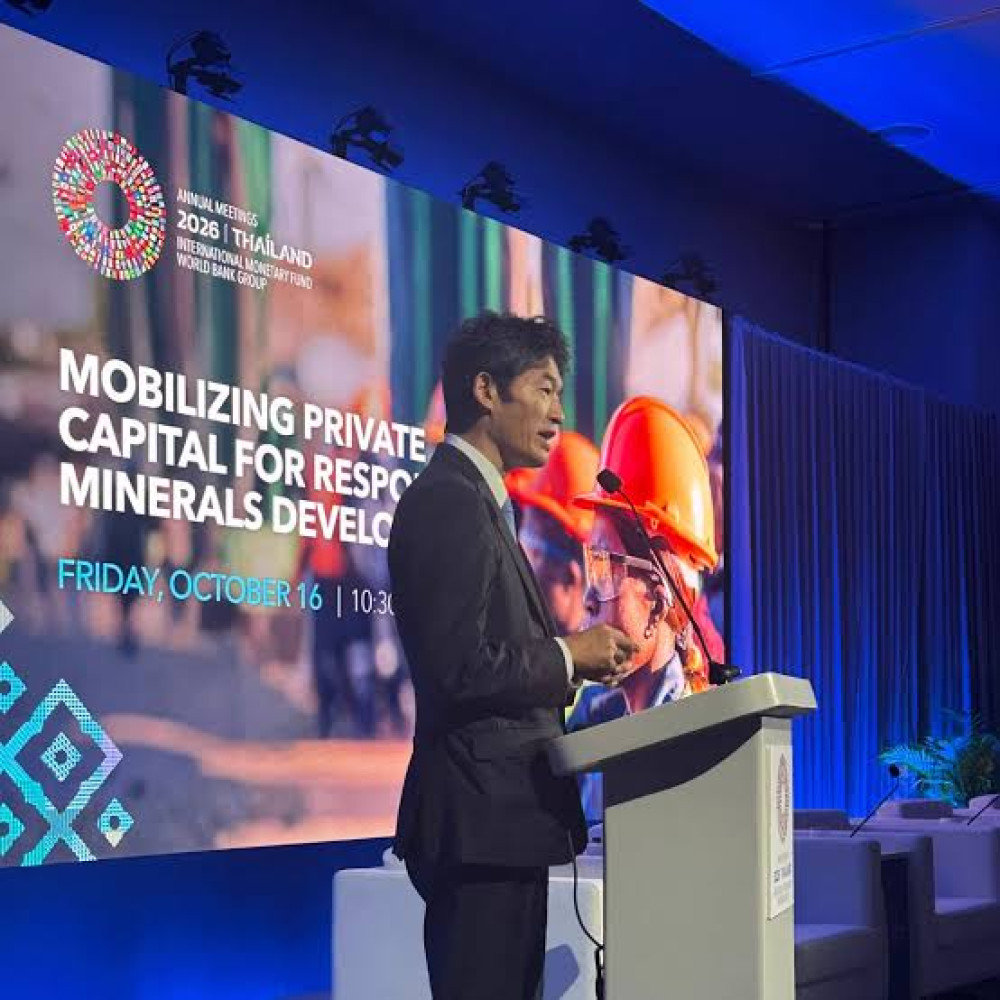

Eight governments have announced country partnerships and compacts with the World Bank Group to advance responsible metals and minerals development, create jobs, and strengthen local economies, as the institution plans to increase its support for the sector fivefold to $19 billion between fiscal years 2026 and 2030.
Argentina, Bolivia, Egypt, India, Kazakhstan, Malawi, Mauritania and Zambia set out priorities, commitments and measurable targets to guide reforms, increase investment and deliver lasting benefits for communities, the World Bank Group announced on October 16, 2026, during the IMF-World Bank Annual Meetings in Bangkok.
The plans identify actions each country can take, including modernizing mineral licensing and geological data, strengthening environmental and social oversight, expanding energy and transport infrastructure, and developing local workers and suppliers.
The $19 billion target combines the World Bank Group's own financing with private capital mobilization. The World Bank will provide policy advice and public financing, the International Finance Corporation (IFC) will invest and mobilize private capital, and the Multilateral Investment Guarantee Agency (MIGA) will provide guarantees to manage risk.
The figure compares with $3.6 billion deployed in the previous five-year period (FY21–FY25).
"This strategy marks a shift towards financing a greater share of the mineral value chain, including geological exploration, processing facilities, transport infrastructure, electricity supply and the development of domestic industries," the World Bank Group said, adding that the initiative "seeks to strengthen the capacity of mineral-producing economies to retain more economic value from their natural resources".
Among the African participants, Egypt has set some of the most explicit targets: increasing mining's contribution to GDP to 6% by 2030 and expanding metals and minerals-related exports to $9.8 billion by 2040, supported by processing hubs and digital licensing systems. Zambia is pursuing annual copper production of 3 million tonnes by 2031 under its Grow Zambia Agenda, with financing and policy reforms designed to develop supporting industries alongside mining. Malawi focuses on licensing transparency, infrastructure and workforce development, while Mauritania seeks to link mineral development with its renewable energy potential.
In South America, Argentina prioritizes copper and lithium development, Bolivia is modernizing its legal framework through a new Investment Bill and Mining Law, India intends to mobilize $5 billion through 2031** for rare-earth corridors and processing parks, and **Kazakhstan** is looking to deploy up to **$20 billion by 2031 via legal reforms and processing investments.
The country compacts are part of a broader shift by multilateral development banks toward supporting processing, refining and manufacturing in mineral-rich economies rather than extraction alone. A joint statement by six MDBs in April 2026 committed them to "add value beyond extraction" and to support "value chain expansion and diversification by moving beyond extraction and into processing, manufacturing, and circular value chains in order to drive economic transformations that deepen domestic value addition".
"Success will be judged by whether mineral development creates jobs, strengthens local economies, and expands opportunity—while protecting people and the environment," said Tsutomu Yamamoto, Managing Director of MIGA.
The $19 billion figure represents a target, not funds already approved or disbursed. The compacts are designed to align government policies with financing from multilateral institutions and private investors, but their impact will depend on whether participating countries can translate reforms into bankable projects and whether the financing materializes. For African producers in particular, the initiative signals a growing willingness by development banks to finance the industrial infrastructure—processing, power, transport and skills—that could allow the continent to capture more value from its minerals than raw exports have delivered.





Comment on this Post
Comments (0)